Read this post on Neil’s Substack: Getting Out Of Control.
The great Tyler Cowen has weighed in on “the least bad way to regulate AI,” and he starts from the right question: how to govern the risks of frontier development without slowing innovation. (Cowen writes only about frontier model development, not about risks from applications like chatbots, health diagnostics, or coding tools.) He gives good reasons to act. The executive branch now governs frontier models through a framework that is opaque, discretionary, and probably too deferential to national security interests. An FDA-style gatekeeper would slow innovation to the speed of government. Generalist courts might impose sweeping liability on model developers. And if one lab causes a disaster, the whole industry takes a reputational hit. Cowen’s answer, an industry-led nonprofit modeled loosely on the Financial Industry Regulatory Authority (FINRA), is among the more thoughtful ideas on offer.
Characteristically, Cowen’s post provoked many responses, too. One of my favorites was Brendan McCord’s nuanced discussion of institutional design principles. Judge Glock also has an robust defense of the common law approach — a steel man of what Tyler calls the “do nothing” approach. Gabriel Weil’s response on X and his underlying scholarship are also worth your time.
I agree with Glock and Weil that the common law is very capable. When Cowen proposes immunizing companies from liability, he gives up too much. He trades away the advantages of the common law for potentially ineffective risk reduction.
But we don’t need to rely on common law alone. There is a way to keep the benefits of common law, incorporate the institutional features McCord supports, and address Cowen’s concerns. Congress can strike a better bargain: impose a statutory duty to mitigate catastrophic risk, with some notification and transparency measures but no prescriptive process regulation.
Cowen dismisses the common law too quickly
Cowen would gather the major labs into a private nonprofit that Washington authorizes and oversees, with government officials sitting on the body. It would audit companies and their models periodically, starting with cybersecurity. A lab that passed an audit would be “exempted from standard liability law,” at least after showing what Cowen calls “basic, reasonable care, as opposed to extreme or deliberate negligence.”
Cowen compares this “private regulation” favorably to two alternatives. He is plainly right about the first, FDA-style pre-approval, which would be too slow and too risk-averse. I have argued the same.
Second, he critiques standard liability law (negligence, product liability, etc.) as the result of a “do nothing” libertarian approach. Relying on liability law to govern model development, he argues, would mean that 1) the companies get sued repeatedly; 2) courts lack the expertise, so this is “unlikely to go well”; and 3) AI companies would prefer a “predictable participatory process staffed by experts.”
These critiques are superficial or fixable. Neither 1) nor 3) is a strong argument against tort liability. Start with 1). If a company causes harm and is the least cost avoider, the efficient number of suits, and the efficient size of the judgments, may well be large. Frivolous litigation does burden large companies, but the right fix is changing trial procedure generally, through loser-pays rules for instance, rather than protecting one set of large defendants from all liability.
As for 3), of course large companies would rather pay a fixed compliance cost than face open-ended liability. Their preference does not make the regime right. Everyone agrees that the net harm from frontier development is uncertain and that we do not yet know how to mitigate it. So why insulate companies from liability for adopting practices that may not reduce risk much or at all?
In fact, trading liability for check-the-box compliance could limit competition, since compliance could be expensive. Worse, it would do so while weakening the incentive to find effective safety practices.
That leaves Cowen’s strongest point: his concern about the courts’ lack of expertise. Agencies exist in large part to build specialized knowledge. Judges and juries who lack it can go wrong in several ways: entertaining claims against the wrong party, misjudging the standard of care, or miscalibrating damages.
Perhaps knowing better, Cowen skips the most common complaint about liability law, that its judgment arrives too late to restore lives or property. Tort law looks backward, but it also shapes behavior going forward. Court decisions reverberate through industries, affecting later training, deployment, and other decisions by labs, boards, insurers, and investors.
Compared to regulation (whether public or private) the common law has real advantages in addressing Cowen’s concerns. Negligence law can handle uncertainty better than most statutory schemes. No one knows the scope or severity of future AI incidents, and experts disagree about which practices would mitigate them. Writing well-calibrated rules in that whirlwind is hard, even for industry participants. A negligence suit seeks simpler answers: it tests legal principles of duty, breach, causation, and injury against a specific fact pattern. The reasonable care standard can adapt to new threats and new best practices without waiting for revised rules. And many different courts decide these cases, which makes regulatory capture difficult.
(On capture, Cowen paints a silver lining on that dark cloud: he claims that labs that want to keep less-well heeled rivals out will push the FINRA-like org toward demanding standards. That assumes, without support, that expensive compliance means safer models.)
The common law also demands less expertise than ex ante regulation does. Courts start from an injury and ask who caused it and what care was reasonable in that situation. Designing rules to govern the future conduct of every industry actor in every possible situation demands far more technical and business knowledge.
Still, there is one indisputable cost to common law’s case-by-case evolution: it takes time to reduce uncertainty. Precedent accretes like sediment settling, and future cases look at the resulting bedrock for the fossil record of decisions. The patterns emerge, but slowly.
Is there a way to speed this process up without losing all the benefits?
A fourth way
Cowen rejects the FDA model and pure tort law, then settles on FINRA. But a fourth option better preserves common law benefits and answers his worry about judicial expertise.
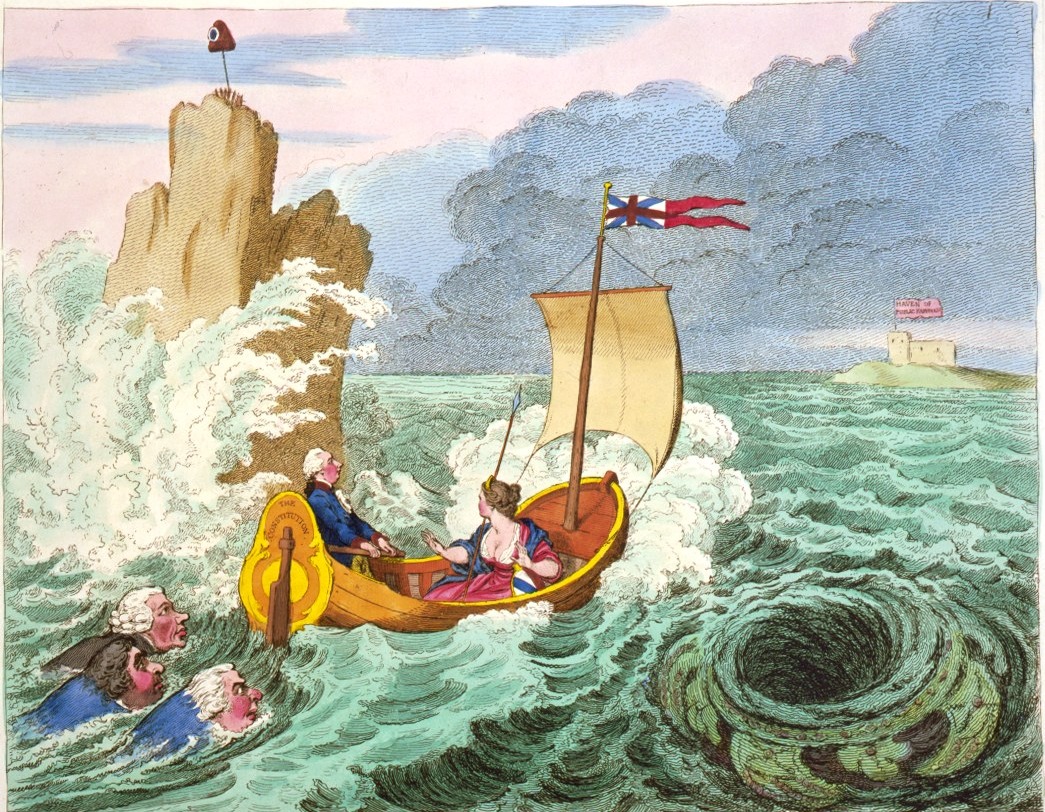
Congress should impose a clear, performance-based duty on frontier model developers: reasonably mitigate the risk of mass casualties and catastrophic property loss. The statute should not mandate particular model design, testing method, or governance system. It should require covered developers to disclose dangerous capabilities and model-specific mitigations, and to give the government a reasonable way to verify such disclosures. It should also require incident reporting. This framework should replace state efforts at regulating model safety — this is a national issue and needs a national standard.
The Department of Commerce, a likely home for this authority, could issue nonbinding guidance after public comment, explaining how it understands the duty and describing testing, security, governance, and verification practices that it believes would satisfy it, while leaving developers free to use other reasonable methods. Commerce would need investigative powers, along with authority to seek permanent injunctions and civil penalties.
The framework wouldn’t require audits, and passing one wouldn’t create legal immunity. (Though audits might be a very reasonable mitigation effort.) When companies disclose dangerous capabilities, Commerce could verify a disclosure itself or accept another reasonable method. Congress could also protect employees and contractors who report noncompliance.
Nothing here requires premarket approval or limits public model access on the regulator’s whims. Commerce could stop a deployment only by persuading a court that a developer had breached the statutory duty, or was about to. Requiring court involvement limits the risk that the nonmandatory guidance and threats of enforcement over time become de facto pre-approval.
By enforcing a duty to mitigate, paired with reporting and guidance from experts who know the technology, Commerce would develop a body of knowledge to inform courts evaluating claims. This would more quickly supply the expertise Cowen rightly says the courts need.
The Federal Trade Commission’s privacy and data security enforcement already works this way. The FTC enforces a general prohibition on “unfair or deceptive acts and practices,” with the details fleshed out through agency guidance and a long line of cases (mostly settlements), adjusting as the technology changes.
The approach also echoes some provisions of state laws, including ones I have opposed: California’s revised SB 1047, vetoed, and its successor SB 53, signed; New York’s RAISE Act; and Illinois’s SB 315. The overlap between these state laws creates a patchwork of state obligations for what is a national issue, which is why Congress should preempt these and other state AI safety laws. (Cowen’s proposal doesn’t specifically say how the FINRA-like body would interact with state law.)
I didn’t invent this framework. Ideas like it are circulating in draft language in Congress. It won’t solve all problems and it surely will create some. But it has a shot at maintaining the benefits of common law while mitigating some of common law’s weaknesses.
I am glad Cowen is hunting for less bad answers to AI safety. The hunt is not over. A federal duty to reasonably mitigate the worst risks, backed by guidance and rigorous review and enforcement, could strike a better balance between safety and innovation than any of the three options he considers.
And sometimes, especially under uncertainty and urgency, “less bad” might be good enough.