Read on Creative Frontiers.
You know the feeling, that eerie sense you’ve already lived this moment. You know the feeling, that eerie sense you’ve already lived this moment. Dad joke deployed! Déjà vu! Let’s press on.
I had a déjà vu moment a few months ago with a song that wasn’t a song. In late February, 2025, a thousand U.K. artists released an album of silence. Multiple studios, one sound: nothingness. It’s called Is This What We Want?, and it’s less a new vibe and more a brick through the policy window. Each track title spells out a message to Parliament: “The British Government Must Not Legalise Music Theft to Benefit AI Companies.” The argument is that proposed reforms to U.K. copyright law will allow generative artificial intelligence to replace musicians. They believe that the studios will be silent and the machines will take the gigs.
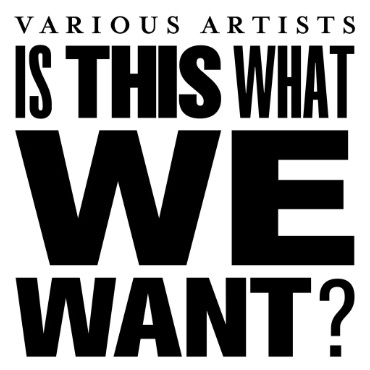
I put the record on (insert joke about adjusting the EQ) while prepping a conversation on AI in music with drummer Elmo Lovano (Go with Elmo! and JammCard) and AI expert Neil Chilson (those CSPAN clips!). In doing a little research, I fell back into 1906 and met an old friend from your Fourth of July playlist, John Philips Souza. I grew up listening to my amazing, WWII veteran grandfather wear out those march records with the “Stars and Stripes Forever,” “Semper Fidelis,” and “The Washington Post.”
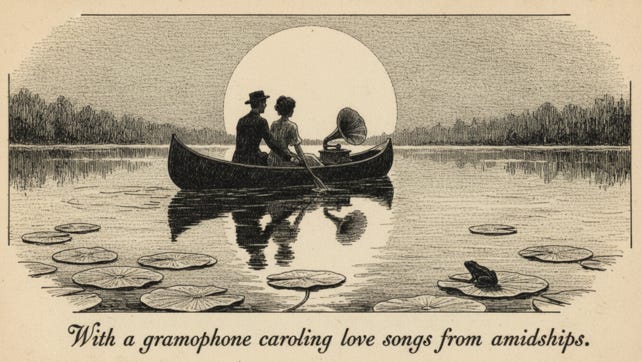
In 1906, Souza wrote an article, “The Menace of Mechanical Music,” that sounds like a century-old oppo piece on AI. He writes that if machines can steal music from artists it will destroy “further creative work,” where “the amateur [musician] disappears entirely” and for the professionals “compositions will no longer flow from their pens.” More machines, fewer musicians. Déjà vu. Only he wasn’t worried about neural nets; he was concerned about the player piano.
A few weeks later, as I was getting ready to talk with Jarobi White from A Tribe Called Quest, the echoes got louder. I kept running into similar indictments. This isn’t real creativity, some say. It just copied music that came before, stealing bits and pieces from other artists, slicing them up, and recombining them without permission. It cheapens the art. It steals jobs from real musicians. Mark Volman of The Turtles summed it up, saying, “[It] is just a longer term for theft. Anybody who can honestly say [that it] is some sort of creativity has never done anything creative.” Déjà vu. Volman and the others weren’t talking about AI. They were talking about sampling.
Then came more conversations with legendary producers, Om’Mas Keith and Jimmy Jam. More déjà vu as they shared stories about responses to innovations in the creative spaces. The nouns changed (piano rolls, drum machines, synthesizers, DAWs) but the verbs and arguments rhymed. I wanted to learn more.
That’s the seed of Creative Frontiers. I’m not here to crown winners, write manifestos, or install a master theory. This is a learning tour. I want to understand why these arguments against new technology sound the same across centuries, what’s genuinely new each time, and what previous debates and resolutions can teach us today.
The question at the center is: How do humans respond to innovation and what can we learn to make more Makers, and consequently more abundance and more human flourishing?
Now, I’m not anti-alarm. Some alarms save lives and catalogs. I’m just pro-curiosity. The silent album is a statement. Souza’s commentary was one too. Both carry a fear that’s real, losing what we love, and what is good, to a machine. But history suggests that most of the time, the machine ends up in the band and for the better. The player piano didn’t erase voices, it taught songs to households without a teacher. Samplers didn’t end creativity, they helped create new genres.
Maybe AI will be different. Maybe not. Either way, I want to understand the patterns before we write the rules.
No grand conclusions, just an invitation. If you’re curious about how creativity and innovation and technology keep bumping into each other, and why the soundtrack of that collision keeps repeating, pull up a chair. I’ll bring the archives. You bring your questions and ideas. Let’s see what we can learn together.