Trespassing on Talent: From Player Pianos to AutoTune
Read this post on Creative Frontiers.
In 2009, Jay-Z called for a funeral. It was time to bury a beloved member of the music community, AutoTune. The Recording Academy offered a eulogy and trophy, awarding a Grammy for his hit song, “D.O.A.” (Death of AutoTune). But people had been grumbling about AutoTune since 1998, when Cher’s “Believe” bent notes like a spoon at a sidewalk magic show. So, what triggered Jay-Z? Why did he suddenly go on offense and call for its execution?
Wendy’s.
The breaking point, by his own telling, was a Wendy’s ad for the “Coffee Toffee Twisted Frosty.” If you haven’t seen it, you should. It begins in your standard, boring office cubicle setting, just another day at work… until a few guys decide it’s time for a coffee break. They instantly transform into the Frosty Posse. Paroding a boy band video, they make their way to Wendy’s, riding the waves of AutoTune’d melodies to enjoy a sweet treat.
The video ends with exuberant joy and delight all around, except in Jay-Z’s living room. He wasn’t smiling. AutoTune had become a gimmick. It had jumped the shark, and there was nothing left to do but leave it for dead.
What makes this moment interesting isn’t just the ad; it’s the backlash to the backlash. DJ Webstar responded to Jay-Z, “Just because you’re rich and you have more money than a lot of new artists coming up, such as myself, doesn’t mean everything you say is right.”
Jay-Z had struck a nerve, the nerve of democratization.
Innovations tend to democratize. They lower the cost of entry. They turn options for the few into accessible opportunities for the many. They spread the power and participation of a few insiders to a lot of hungry outsiders. As a result, more people can make things, but this in turn shifts the balance of who sets the standards and who reaps the rewards. If you’ve long benefited from the old boundaries, democratization can feel like trespassing, like a threat to your world. If you’ve been stuck outside of those boundary lines, then being told that the new entrance is no longer legit sounds a lot like someone calling the cops on you.
We’ve seen this before, a century earlier, with the player piano.
At the turn of the century, the piano was a Victorian ideal. It was a virtuous exercise, requiring patience, discipline, and hard work. It created a refined and restorative place in an otherwise dirty and chaotic industrialized nation. The piano was a status symbol of taste and class; it was an accessory, a symbol, for the upper classes.
The player piano threatened all of this. It was a machine that played the piano for you. Instantly someone could have live music without any training or familiarity with music and the disciplines associated. Many worried that the “lower classes” could now mimic the “cultivated class” and skip several rungs on the societal ladder. These high priests of taste and refinement denounced the player piano.
The companies selling the machines didn’t exactly apologize; they marketed the democratization. Gulbransen ads proclaimed, “The Biggest Thrill in Music is playing it Yourself.” It continued “And now even untrained persons can do it. You can play better by roll than many who play by hand.” Such ads often included a photo of a baby working one of the pedals that powered it. This was deliverance for the novice, terror for the norm guardians. And sales skyrocketed. By 1919, player pianos were outselling standard pianos.
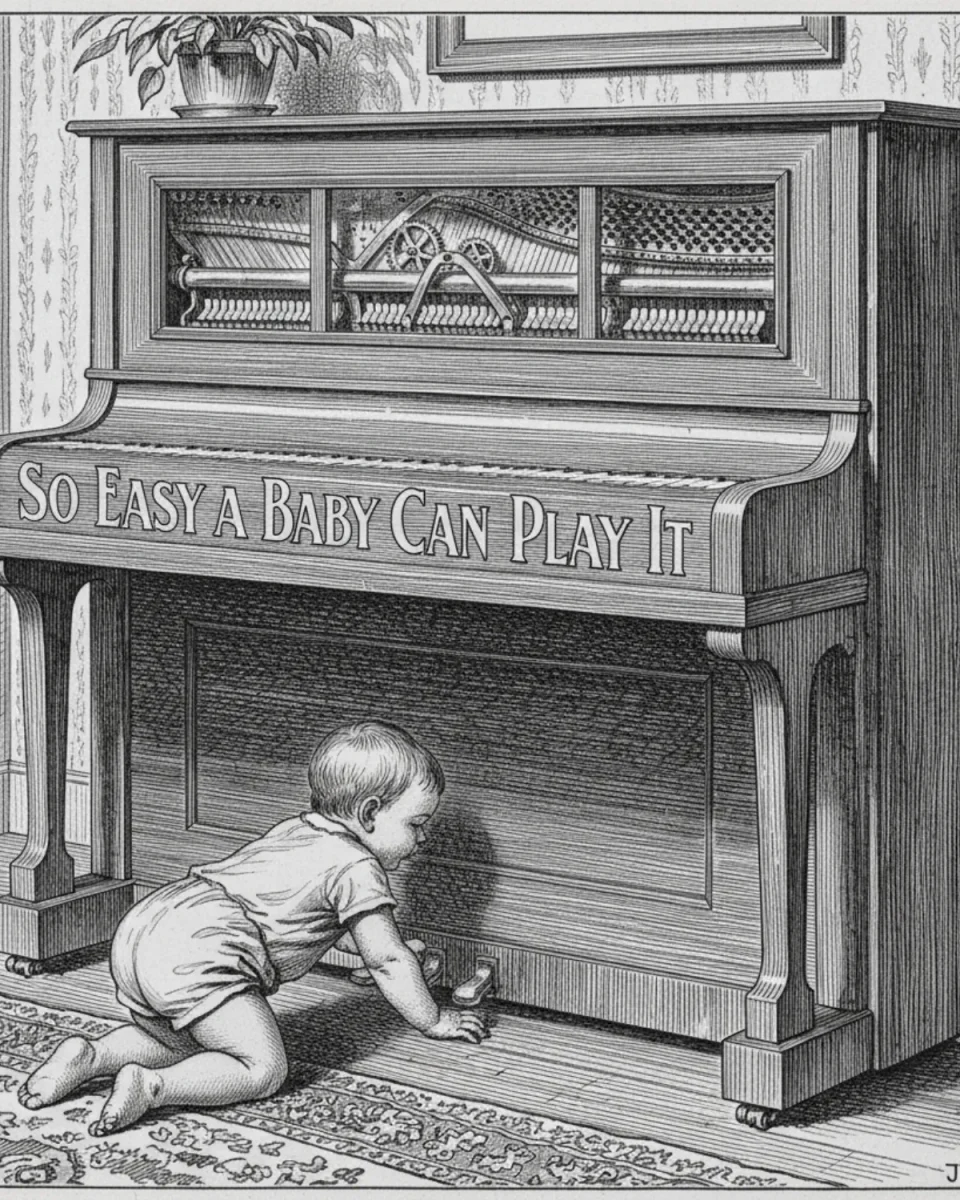
AutoTune had a similar democratizing effect. It opened doors for artists who lacked the bulletproof intonation to compete, and it gave others (looking at you T-Pain) a new palette for creation. So, when an established artist, such as Jay-Z, declared the tool out of bounds, you can see why emerging artists called foul.
The player piano didn’t topple the social order, in fact, by 1931, the industry had collapsed. And AutoTune can certainly grate, but it’s also brought a lot more makers to the party, creating more weirdness, more genres, and more value. Democratization isn’t always cultural vandalism, it can also be an invitation.