Read this post on John’s Substack: Creative Frontiers.
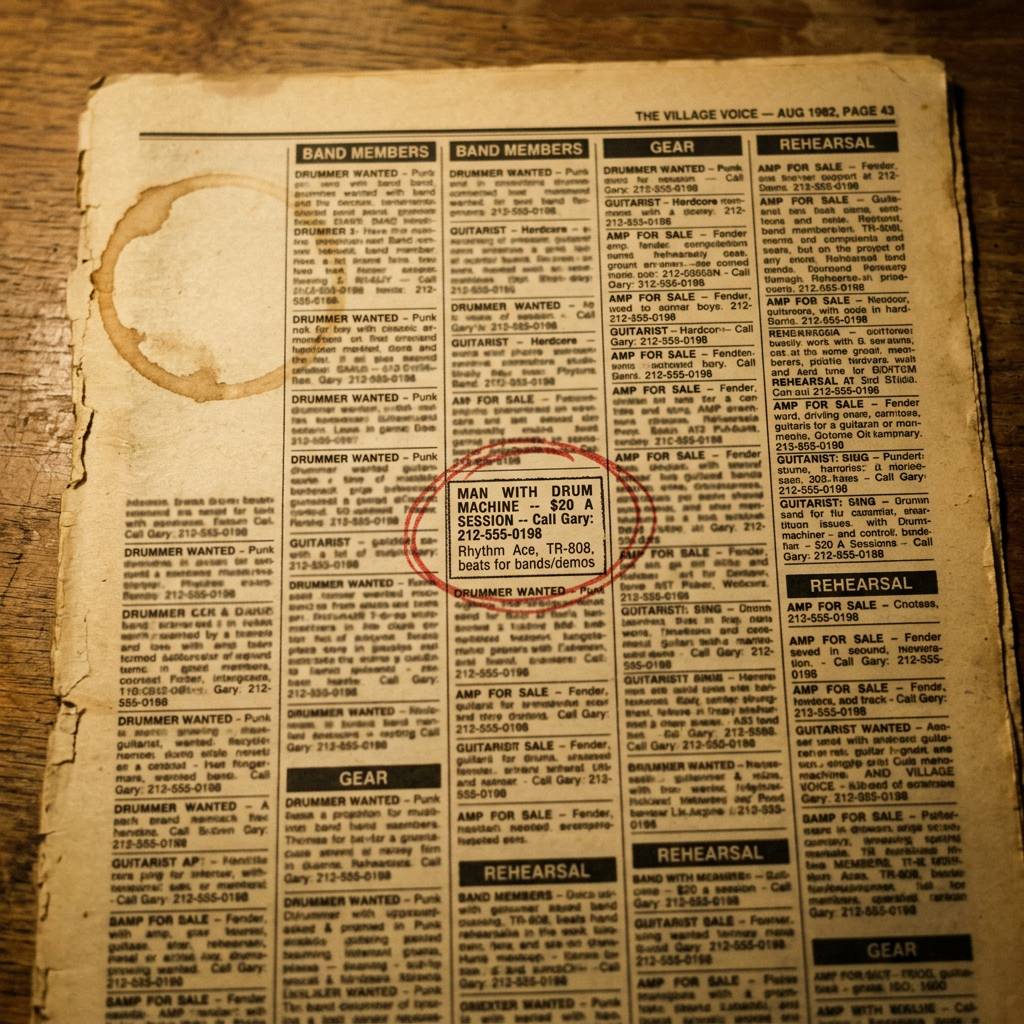
The ad was in New York’s local “Village Voice”: “Man with drum machine, $20 a session.”
While he swept floors at Carden Distributors in New York City, Arthur Baker enjoyed listening to German electronic band, Kraftwerk. It gave him ideas for his side hustle as a music producer. He was working with a local DJ, Afrika Bambaataa, exploring a new sound blending the electronic music Baker loved with the emerging uptown dance and hip-hop world that Bam knew.
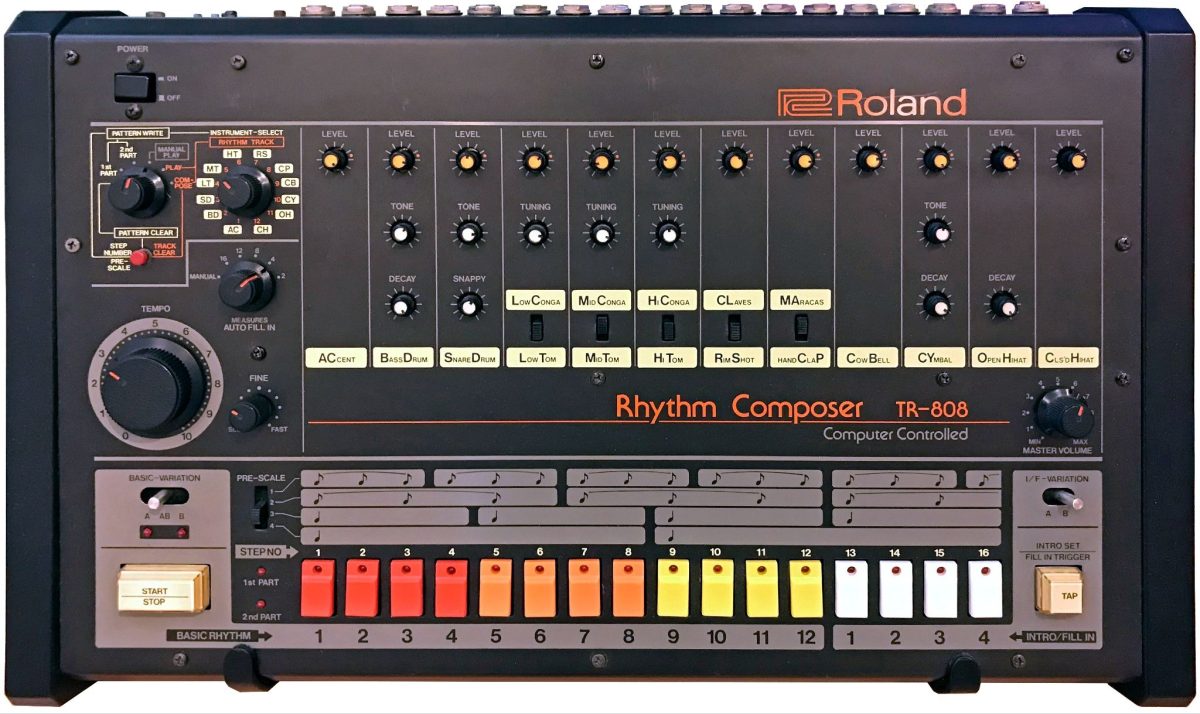
For the rhythm, they didn’t want a live drummer. They wanted something different, something more futuristic, and when they heard Roland’s new TR-808 drum machine, they’d found it. But there was a problem, they didn’t own an 808.
That’s when they saw the ad, a man with a drum machine. They called him in; his name was Joe and he wanted cash. That’s all we know. Oh, and he didn’t understand what Baker and Bam were looking for. So, they played him some Kraftwerk, he pulled something together, and they laid it down for the new track.
In June of 1982, Tommy Boy Records released the song, “Planet Rock.” It would change the course of music, in no small part because of its heartbeat, the Roland TR-808. But the drum machine didn’t actually sound like drums, and that was the secret. The 808 changed the world not because it replicated and replaced existing sounds, but because artists started treating it as something entirely new and different.
The Wrong Future
For several years, Roland had been making machines to provide rhythm accompaniment, such as the CR-78, designed for organists. In 1980, the TR-808 was the next step, a metal box with sixteen sounds intended to reproduce a drum kit and percussion. The problem: it didn’t sound like drums.
The Linn LM-1, on the other hand, also released in 1980, did sound like drums. You can hear it in many early 80s hits, including Prince’s “Purple Rain” and Michael Jackson’s “Wanna Be Startin’ Somethin.”
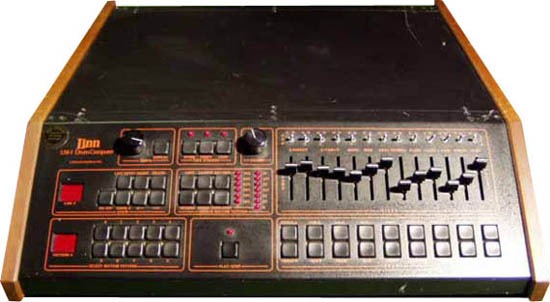
The LM-1 sounded “real” because it used digitally recorded drum sounds. But that required a lot of memory, and this was 1980, so it was expensive. While an LM-1 cost more than $5,000, the 808 was just over $1,000 because it used analog technology. Instead of storing actual drum sounds, it synthesized approximations with transistors. The result was a suite of sounds doing really bad impersonations of drums, including a cowbell that sounds like a laser cannon warming up.
Unfortunately for Roland, most musicians were looking for realistic drum sounds like the LM-1. The 808 couldn’t deliver, and Roland discontinued it in 1983 with only 12,000 units produced.
The irony is that its commercial weakness, the synthetic analog sound, would soon become its greatest advantage. For one, the cheaper technology made it more accessible to emerging creators. But, perhaps more importantly, the analog approach gave artists more control over the sounds they could create by altering the decay, tuning, and other features. Instead of being chained to a recorded sound, you could manipulate what it produced. The flexibility offered an endless palette of creative possibilities.
So, thanks to its technology from the past, the TR-808 was soon to become a tool for mapping the future.
When Fake Became the Point
One of the early adopters was Greg Broussard, aka Egyptian Lover. He had grown up recording breakdowns from the radio to create mix tapes. After high school, he joined the popular Los Angeles music crew, Uncle Jamms Army. And as he looked for new sounds, he encountered Afrika Bambaataa’s, “Planet Rock.” When he met a close friend of Bambaataa’s, Afrika Islam, he immediately asked about the song’s rhythm and learned it was a drum machine called the TR-808.
Broussard was curious. He didn’t know what a drum machine even was. So he and Islam went immediately to the local Guitar Center. The salesman showed him how to program a beat, and Broussard re-created the sound of “Planet Rock.” He was sold, bought the 808, and went home to make something else entirely.
Immediately, he began using the 808 in his live performances with Uncle Jamms Army. He wasn’t recreating “Planet Rock” or a recorded drum sound; he was creating something totally new and totally his. He even used a rhythm pattern noise accidentally discovered when an engineer mistakenly plugged into the wrong output on the back of the machine.
The 808 became a foundation for his music, carrying hits like “Egypt, Egypt,” and he toured with four machines to cover all the songs he programmed. Along the way, he also spread the good news of the 808, teaching others to use it, like Luke Skyywalker (Luke Campbell), who would help embed it in the emerging Miami bass scene and 2 Live Crew.
Broussard and others were charting new pathways in music with the 808 because they stopped asking whether it sounded real and instead started leveraging its limitations for new possibilities. Its unnatural tones and flexibility offered an aggressive sound with an anti-establishment edge. Need proof? Just listen to how producer Rick Rubin extended the decay on the bass drum and placed it front and center in the Beastie Boys debut album “Licensed to Ill.” It’s less of a sound and more of a low-frequency event.
By the mid-80s, the 808’s strange sounds were no longer failed representations of acoustic instruments. They were the raw material for a new era in music, which continues today on albums like Kanye West’s “808s & Heartbreak,” which helped pioneer new subgenres including emo rap and experimental R&B.
Beyond Replacement
When new technologies impact the arts and creativity, we can be quick to judge them first by what they threaten to replace. Those concerns are legitimate and innovation always arrives with disruption in the passenger seat.
In the 1980s, drum machines could and did replace some drumming and session work. Perhaps as the old joke goes, what’s the difference between a drummer and a drum machine? You only have to punch the beat into the machine once.
But replacement is only part of the story.
The 808’s most important legacy wasn’t in its substitution for drummers but in its expansion of creative possibilities.
As artificial intelligence disrupts creativity and music, much of today’s debate centers on imitation, automation, compensation, and replacement. The 808 suggests that this may not be the whole ledger.
We don’t yet know what creators will discover through AI when they treat it not as a tool for replication but for exploration. But the lesson of the 808 suggests there are exciting tunes to come when we don’t confuse imitation with possibility.