Read this post on Josh’s Substack: Powering Spaceship Earth.
We released a new video about the electric grid’s history and development. The big ideas are:
- The path to energy abundance requires considering the entire stack of energy technologies. Generation, transmission, and distribution all matter.
- Regulations governing the grid haven’t kept pace with revolutionary innovations.
- Part of an abundant future will be unlocking the grid edge.
To give you a sense of the magnitude, as much as half of the peak demand on grids can be from residential customers. In fact, for the Texas grid, half of the peaks in winter and in summer comes from residential energy demand. This problem became particularly difficult to handle during Winter Storm Uri in 2021.
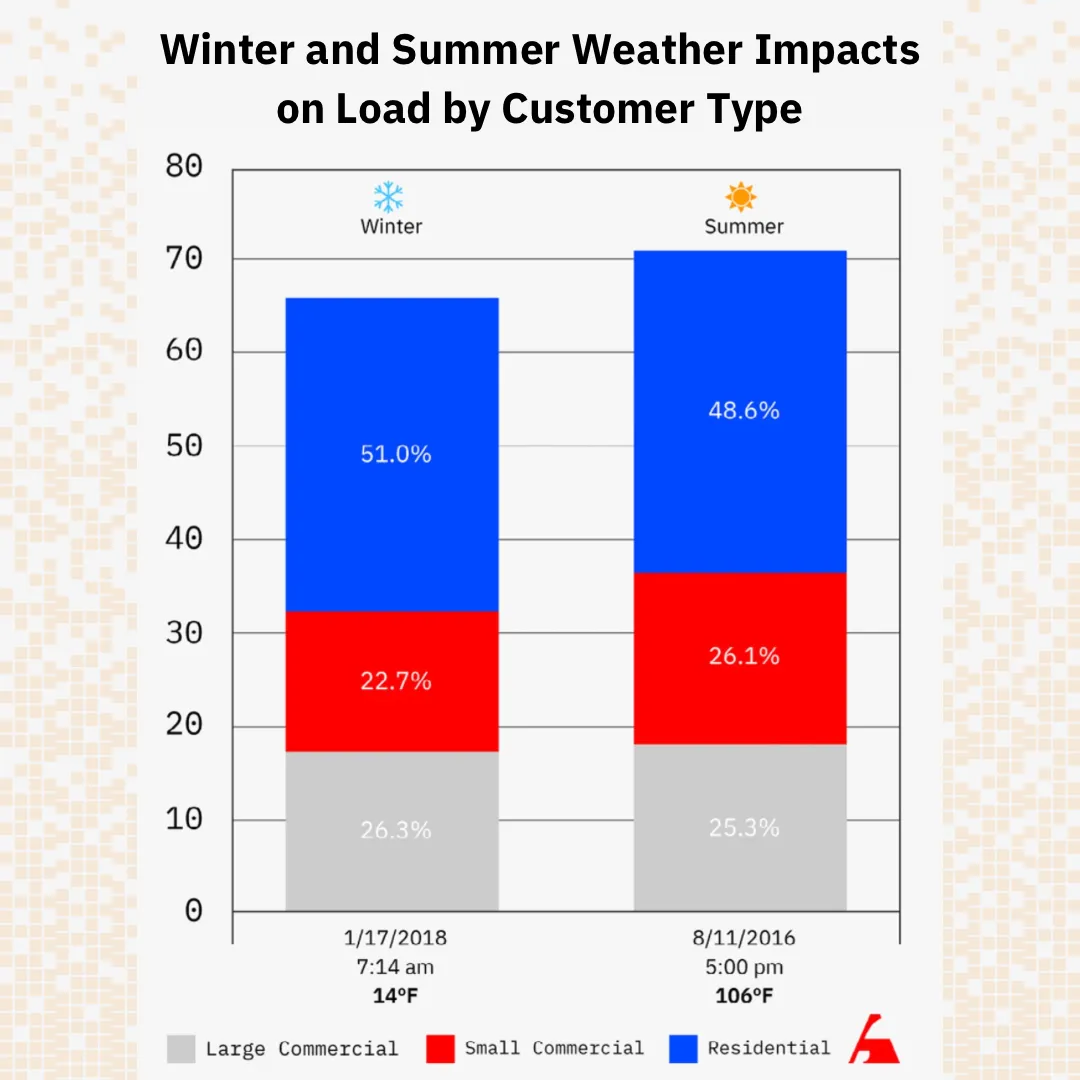
Of course, we’ll also need more energy. These demand-side options are important because they incentivize solutions from the top to the bottom of the energy challenge. They create ways for you to make money by meeting the needs of other energy users. This reflects that the utility is not always the right institution to respond. In other words, current rules are inefficiently centralizing the grid.
This kind of demand-side coordination is now live in Texas far beyond what it was in 2021. NRG plans to coordinate an entire gigawatt worth of energy assets like EVs, batteries, and smart devices. David Energy provides opportunities for residential customers to sell energy into the market. Octopus Energy is expanding in the state as well.
Each of these enterprises illustrates the potential we lay out in the full video. Check it out here or on Twitter. You can also follow one of the experts we interview—Lynne Kiesling— over at her Substack, Knowledge Problem.