Read this post on John’s Substack: Creative Frontiers.
Folks packed into the Pasadena Civic Auditorium to celebrate a very special birthday. The R&B hit factory, Motown, was turning 25. The stage featured performances by some of the greatest icons in music history: Marvin Gaye, Smokey Robinson, Diana Ross, and even the Four Tops.
But when the special aired on NBC two months later, forty-seven million viewers were talking about only one man.
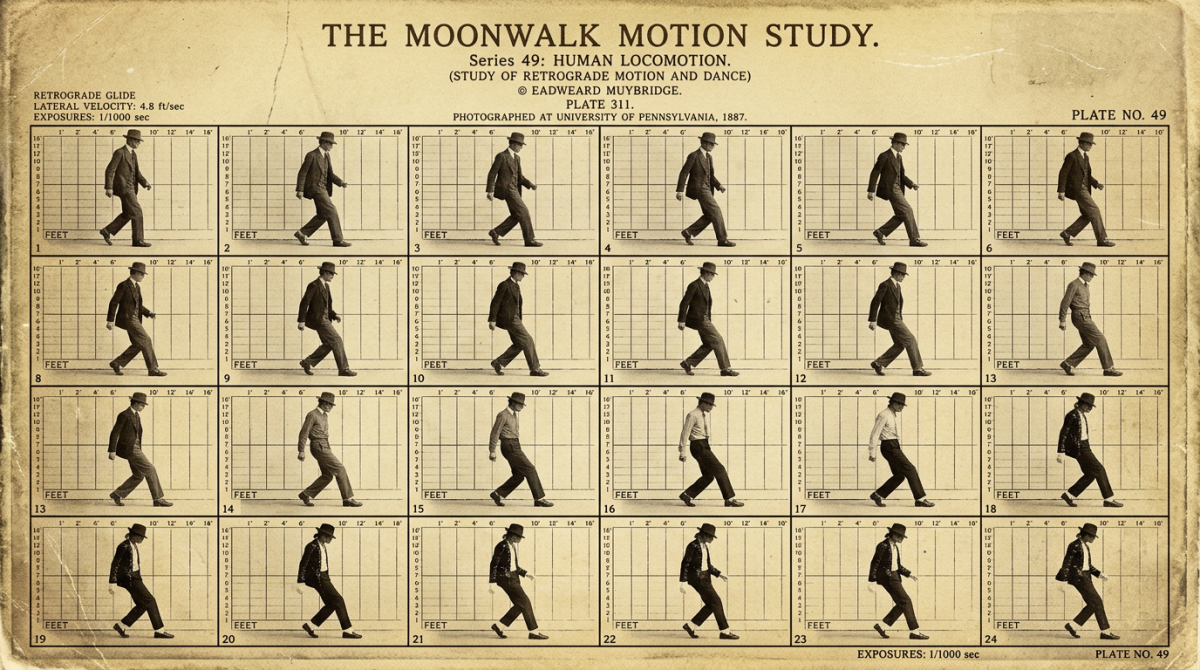
Dressed in a fedora, a sequined jacket, a single white glove, and bedazzled socks, twenty-four-year-old Michael Jackson had followed a performance of the Jackson 5 for one of his new solo tunes, “Billie Jean.” Halfway through the track, he planted his toe, and appeared to glide backward effortlessly through space. The audience lost its collective mind over the instantly iconic moonwalk.
In the decades since, nearly every pop star on the planet has borrowed, adapted, or outright lifted Jackson’s dance routines. Which raises an uncomfortable question for modern intellectual property law: if a performer uses that slide on stage, do they owe the Jackson estate a royalty check?
Before you answer that, it’s worth asking a simpler question, were they even his moves to sell?
The moonwalk doesn’t have an author. No, it has a chain.
And following that chain backward lands you in the middle of a debate over artificial intelligence that many insist is simple, but which history reveals to be anything but.
The DNA of a Dance
In a 1903 silent film adaptation of Uncle Tom’s Cabin, several Black actors perform a dance known as the cakewalk. It originated on Southern plantations as an exaggerated “march and glide,” a subtle, subversive parody mocking the glamor and hubris of White high society. The movement was part of a genre known as “eccentric dancing” which included the “Virginia essence,” a slow and smooth shuffle that is the great-great-grandfather of the moon walk.
When Vaudeville exploded at the turn of the century, and was later adapted for the big screen, eccentric dancing moved from southern porches to big-city stages. By the 1930s, the essence of the cake walk and the moon walk was visible in the footwork of Earl “Snakehips” Tucker, Bill “Bojangles” Robinson, and jazz legend Cab Calloway.
By the 1940s, French mime Marcel Marceau was performing the slide in his famous “walking against the wind” routine. A decade later, Dick Van Dyke did a variation of it on “The Pat Boone Chevy Newsroom” in the 1950s. But the slide achieved pure, frictionless perfection in 1955, when dancer Bill Bailey executed a backward glide off the stage of the Apollo Theater.
During the Black Power movement of the 1960s and 70s, the dance returned to its roots of resistance and community in soul and funk. James Brown incorporated it into his kinetic performances, and the dancers on the incomparable Soul Train took it further. It was here that the dance groups, Eclipse and Electric Boogaloo, glided back and forth across the stage in the late 70s, incorporating the unmistakable moonwalk.
A few years later, as Michael Jackson prepared for his upcoming performance of Billie Jean for the Motown celebration, he sought out the Soul Train dancers that had been performing the backslide. He rehearsed the move and worried he wasn’t quite getting the feel of it. Nevertheless, as he incorporated it into his routine for that fateful evening, it would soon forever become associated with him.
When asked later how he created the move, Jackson credited the kids he saw dancing in the streets of Harlem in the late 70s. His instructors wished he had mentioned them, but either way, Jackson was citing a tradition instead of a moment of invention.
He was describing the ancient practice of creativity, a practice seen in the West African griot.
The Tradition of the Griot
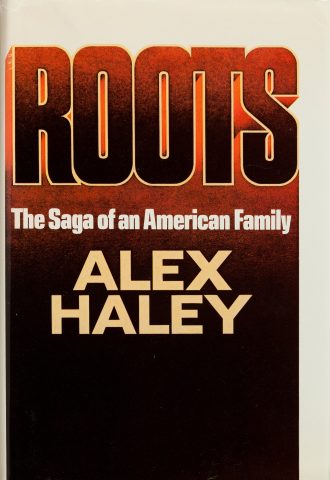
Fifty years ago Alex Haley rocked the best-seller lists with his groundbreaking novel: Roots: The Saga of an American Family. It traces Haley’s ancestry, beginning with Kunta Kinte, who was captured in Africa and enslaved in 18th century America. Haley traced his roots to Kinte, he said, through the account of a griot in The Gambia. And for many in the west, this was the first they’d learned of griots.
In West Africa, a griot is an artisan of memory. A creator of stories, songs, and dance that shepherd the traditions from the past, through the present, and to the future. Commonly described as “praise-singers,” scholar Thomas Hale explains they are so much more: historian, genealogist, advisor, spokesperson, diplomat, interpreter, musician, composer, poet, and teacher.
That’s a lot of jobs, and none of them start from scratch.
The griot begins with inherited stories and gives them new expression for a particular time and audience. The creativity is in the transformation of the inheritance. It’s the act of absorbing what came before, refining it through a new voice, and handing it off to the next person in line. The goal isn’t to own the tradition, but to push it a little further forward.
That process makes the idea of a single creator, or owner, difficult to pin down. Where does the inheritance end and the new expression begin? And how much of what was handed down can one claim as theirs as they hand it to someone else?
Western law looks at a breakthrough performance, like the moonwalk, and instinctively reaches for a surveyor’s tape, eager to stake out a claim and write a property deed. The griot tradition looks at the same chain, plantation to vaudeville to Harlem to Soul Train to Pasadena, and sees creativity working exactly as intended, one iteration after another, carrying the traditions forward.
The Surveyors at the Gate
Today, record labels, publishers, and visual artists are suing over the unlicensed use of their work to train generative AI. Beneath those accusations sits a story we’ve grown accustomed to telling about creativity: an expression can, in fact, belong to a single author. And with that ownership, that author can make a claim on whatever someone else makes from it. Follow the influence, send a bill.
The moonwalk would like to have a word.
The challenge is that like the griot, every artist begins by ingesting inputs from the world around us. It’s phrasing from a record heard at age seven, a rhythm heard in the river flow, a step learned from a street dancer in Harlem. Then we process those patterns, and generate a new output.
That’s the underlying process we’ve taught machines to perform. The scale of AI is new and extraordinary, but the dependence on prior work is ancient.
And while the scale may change the consequences, it doesn’t change the nature of the process. Creativity requires the raw material of life. The more of these building blocks that we place behind a permission slip, the less room we leave for the creators who come next.
Michael Jackson absorbed over a century of American dance history, synthesized it in a rehearsal hall, and gave it back to more than forty-seven million people. If he’d been required to clear the underlying rights to the cakewalk, the Virginia essence, Marcel Marceau’s pantomime, and Bill Bailey’s Apollo routine, the moonwalk would still be stuck in legal purgatory.
Yet, this is the direction we’ve been traveling for well over a century. With every new legal extension, sample clearance rule, and statutory expansion, we have steadily built higher fences around the cultural commons. We have made the act of creating, especially for the kids without a legal retainer or studio budget, a little harder and a little more expensive.
The griot tradition understands that culture thrives when it is freely learned, remembered, and carried forward.
We used to understand that too. Now, whenever someone creates, our instinct isn’t to sit in awe, but to check the chain of title.