Read this post on Creative Frontiers.
Thomas Nast was sitting in his Harlem home in the summer of 1871 when a visitor arrived with an odd proposition.
The man mentioned he had heard a rumor that Nast would soon be departing for Europe to study art. Nast replied that the idea was absurd; he was busier than ever drawing cartoons for Harper’s Weekly and couldn’t possibly afford to step away.
Ah, the visitor countered, but perhaps he could afford it. In fact, Nast could receive a hundred thousand dollars if he simply took a trip.
Nast played along. What about two hundred thousand?
Certainly.
What about half a million?
Absolutely, the visitor assured him. Half a million dollars in gold, just to get on a boat and stop drawing.
Nast declined. He was determined to stay, “to put some of those fellows behind the bars…”
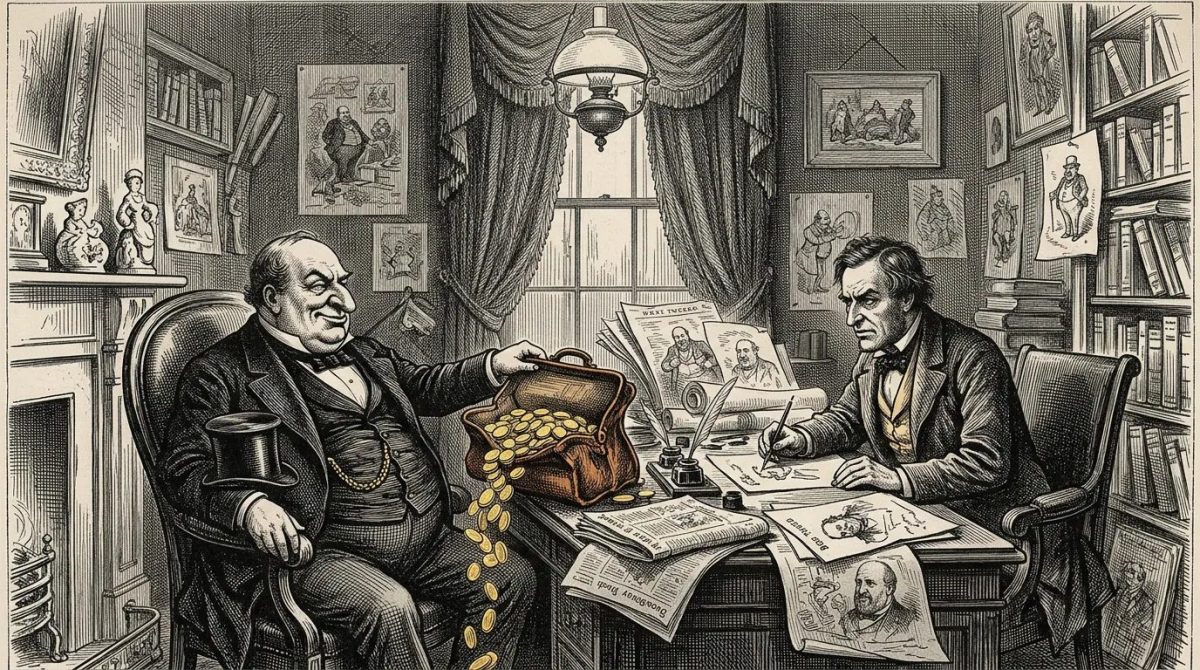
The “fellows” were the infamous William M. “Boss” Tweed and his associates, the officials that ran New York City. The visitor was a representative from the Broadway Bank, delivering a not so subtle bribe on their behalf.
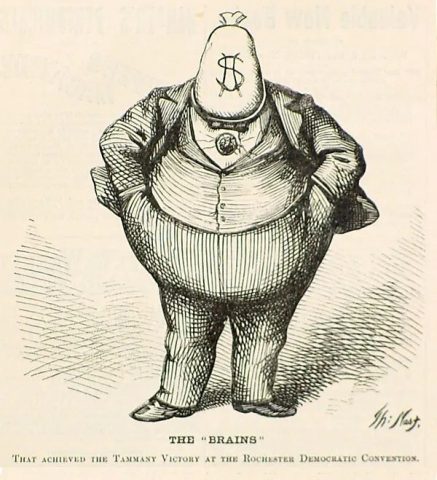
Nast had spent the better part of a year rendering Tweed in Harper’s Weekly as a vulture, a bloated plutocrat, and a moneybag. And the cartoons were working, steadily loosening the boss’s grip on the city.
Tweed was ready to do anything to stop “them damned pictures.” But he couldn’t because Thomas Nast didn’t need Boss Tweed’s permission to draw him.
Today, a century and a half later, the powerful haven’t stopped fighting the unauthorized use of their image. They’ve just found a much more elegant solution than putting someone on a boat.
The Cartoonist and the Moneybag
To understand why Boss Tweed was willing to spend half a million dollars, roughly thirteen million dollars today, to silence a single cartoonist, it helps to understand what was at stake.
William H. Tweed had spent nearly two decades in public office assembling total control over New York City. By 1870 his political machine, the infamous “Tweed Ring,” was a marvel of municipal extortion, casually siphoning millions upon millions of taxpayer dollars’ through rigged contracts, orchestrated elections, and brazen bribery.
And he wore his new found wealth, albeit stolen, on his chest, sporting an enormous diamond stickpin in his tie. Reformers were furious, but they couldn’t prove any wrong doing, and he remained a hero to much of the working class city.
Then he met a guy with a pen.
Thomas Nast had joined the staff of Harper’s Weekly in 1862 to sketch the bloody frontlines of the Civil War. With the war over, he turned his pen toward the municipal bloodletting in Manhattan. In 1870, he poured out everything he had on the Ring with the approaching gubernatorial election. He churned out up to seven drawings a week, each rendering Tweed’s machine as a grotesque syndicate picking the city’s bones clean. (He was so successful that The New York Times and Mark Twain gladly joined his crusade.)
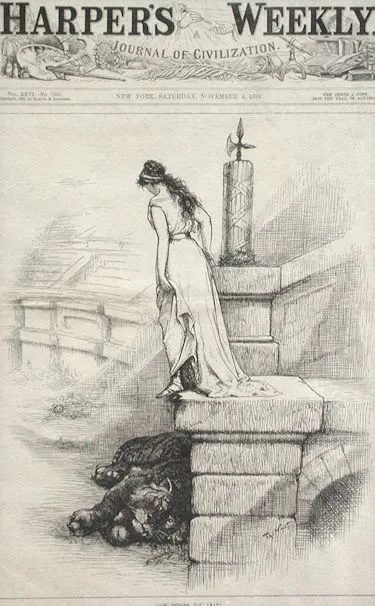
Where thousands of words of journalism had failed, images triumphed. Nast’s cartoons bypassed the brain and hit the public right in the gut. Tweed could feel the tide turning, and he knew exactly why.
“I don’t care a straw for your newspaper articles,” Tweed famously barked at a reporter. “My constituents don’t know how to read, but they can’t help seeing them damned pictures.”
He was right. They did see the pictures, and in 1873, Boss Tweed went to jail.
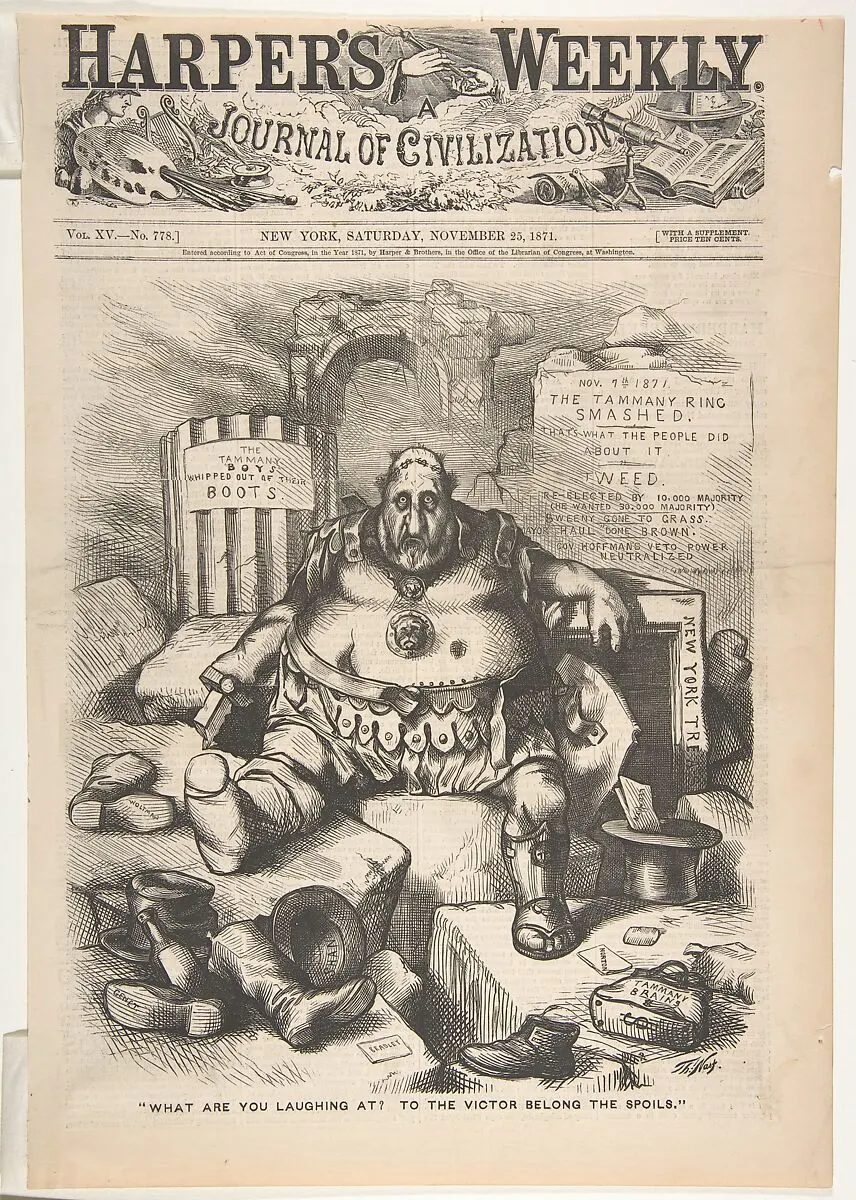
The cartoons worked because they looked like Tweed, and Nast could not be stopped. There was no “right of publicity” for Tweed to wield to control the use of his likeness. Nast didn’t need his permission to mock him.
Get in the Zone
Today, the issue has taken on a new algorithmic shape.
Generative AI can clone your face and voice in a matter of minutes, if not seconds. A realistic video of a politician or celebrity saying something they never actually said can be produced by anyone with a laptop. Understandably, many are worried, and Congress, in response, is considering the NO FAKES Act, a federal right of publicity giving individuals sweeping legal control over their likeness.
This is where it gets interesting.
The proposed law includes a specific exemption for satire and commentary, to protect the Thomas Nasts of the world. After all, parody is a critical instrument in the tool box of a republic. There’s a reason that a unanimous Supreme Court in 1988 cited Thomas Nast as a prime example of why the First Amendment’s right to free expression must be safeguarded.
As Chief Justice William Rehnquist wrote, Nast was “probably the greatest American cartoonist to date,” and his relentless assault on Tweed was a critical part of the “political discourse” necessary to expose corruption. A free people must be free to criticise the powerful.
The NO FAKES Act acknowledges this, which is why it has the exemption.
So what’s the problem?
The problem is that a legal exemption is merely a zone, and you have to know exactly where the boundary lines are to know if you’re safely inside it. That’s not a problem if the legal lines are brightly painted. But three decades ago, a robot in a wig erased the clarity.
The Robot in the Wig
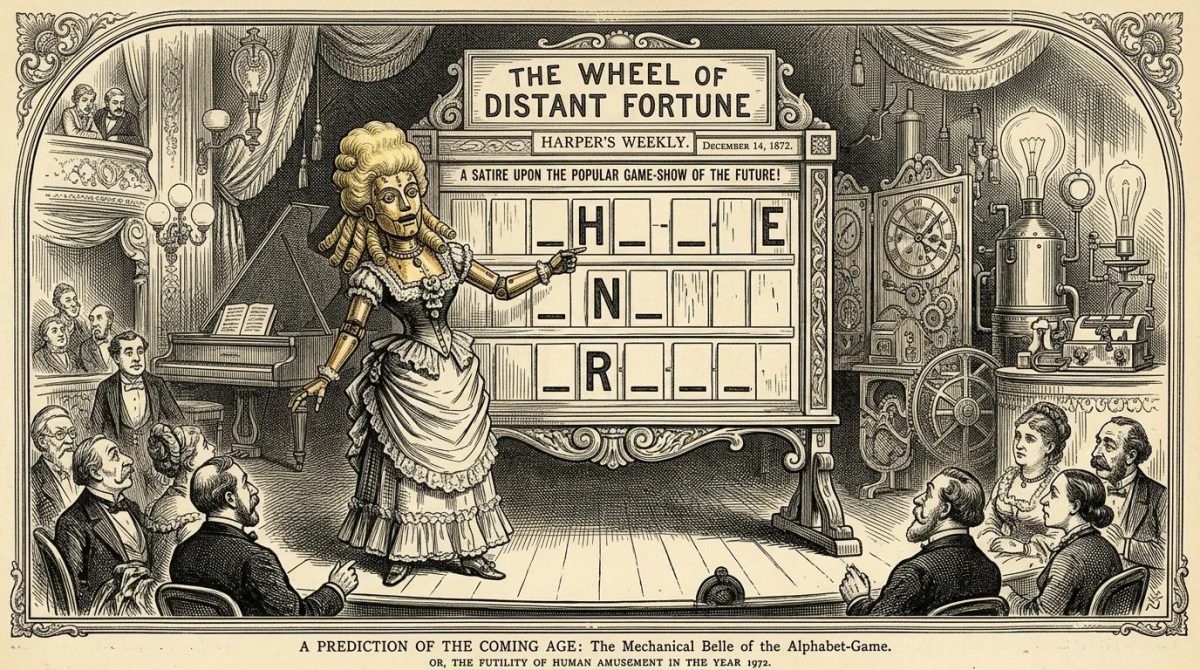
In 1992, Samsung ran an advertisement about the future, featuring a robot in a blond wig and an evening gown standing next to a giant letter board. To be clear, the robot was not Vanna White, and there were no statements suggesting that it was. The ad was just a humorous, sci-fi forecast that Wheel of Fortune would still be running in 2012, long after the human hosts were replaced by automation.
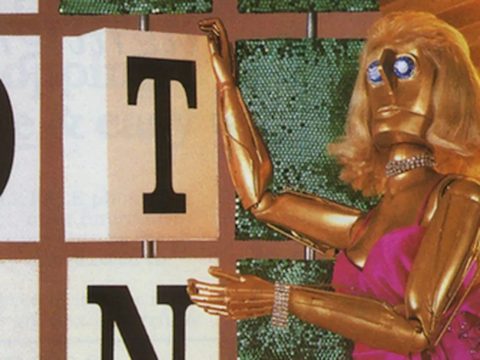
Vanna White sued, and a federal appeals court ruled in her favor. California law protected White’s right of publicity, and while Samsung had not used the traditional markers of her likeness: her name, face, or voice, the court ruled that Samsung had “created a likelihood of confusion” through “appropriating her identity.”
This was a massive extension of the right of publicity, to now include anything that simply reminded the public of a celebrity.
The boundary lines of parody were fading.
A dissenting judge named Alex Kozinski warned that this decision was “creating a new and much broader property right, a right unknown in California law.” This new right handed public figures the power to prevent others from even evoking their image in the public’s mind. It went far beyond restricting the expression of an idea. It was the authority for one person to cancel anyone’s freedom to mock them.
As Kozinski bluntly summarized, “That’s a speech restriction unparalleled in First Amendment law.”
Thanks to Vanna White, it’s less clear to the Thomas Nast’s of the world if their evocation of someone’s likeness is legally protected satire or illegal property theft. If you draw a cartoon to call to the viewer’s mind a specific political boss, is it legal? You can’t be sure.
And that uncertainty means you have to hire lawyers. But a lawyer can only give you an educated guess. If you really want to know where the boundary line is, you have to go to court. And that can cost you a fortune.
Today, Boss Tweed wouldn’t have to win a right of publicity case against Thomas Nast. He would just need the financial math of the litigation to ruin him. We know Tweed didn’t lack the money, he just lacked the legal standing to drag Nast through a decade of lawsuits.
The NO FAKES Act would hand him that standing.
The Wall and the Door
None of this means that AI-generated fakes are not a real problem. The question is whether the remedy preserves the critical freedoms of the First Amendment, or quietly dismantles them.
Thomas Nast didn’t need a legal “safe harbor.” He didn’t need a team of lawyers. Because he had a wall, an absolute freedom to draw the powerful without their permission.
The NO FAKES ACT replaces that wall with a door. And every door has a gatekeeper, and unfortunately the gatekeeper usually favors the person with the most money and power.
In 1871, Boss Tweed’s banker had to offer a half million dollars in gold to try and get a cartoonist on a boat.
The modern version doesn’t require that much gold or creativity. It just needs to file a lawsuit.