Read this post on Creative Frontiers.
This essay is a departure from my usual ruminations on innovation and pop culture in the past. It harkens back to my early days as a civil engineer and is an adaptation of a presentation I recently gave to business leaders.
We have a building problem, and the solution might be more elephants.
Follow the builders—across art, technology, and culture—before the future hardens.
America is currently running a deficit of about 4 million housing units. We are effectively pricing a generation out of the American Dream, while our infrastructure gets a C- from the American Society of Civil Engineers.
We have a ton of building to do, but there’s a problem; the engine is stuck in the mud.
It reminds me of a different time,1884.
On a cold Friday that May, crowds gathered to see the brand new Brooklyn Bridge. It was the longest suspension bridge in the world and the tallest structure in the Western Hemisphere.
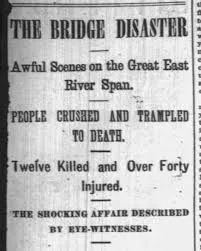
While many were wow’d by the size, many were also worried that the engineering would fail. It had only been open a week and as crowds hurried across, a woman tripped on the stairs. A scream triggered a panic, and twelve people were crushed to death in the stampede.
Now, the city faced a crisis. Today we would solve this by forming a Blue Ribbon Commission. We would launch a feasibility study, followed by a public comment period, followed by a lawsuit, followed by a 4,000 page predictive model of pedestrian density.
New York City didn’t do that. Instead, P.T. Barnum marched 21 elephants across the bridge.
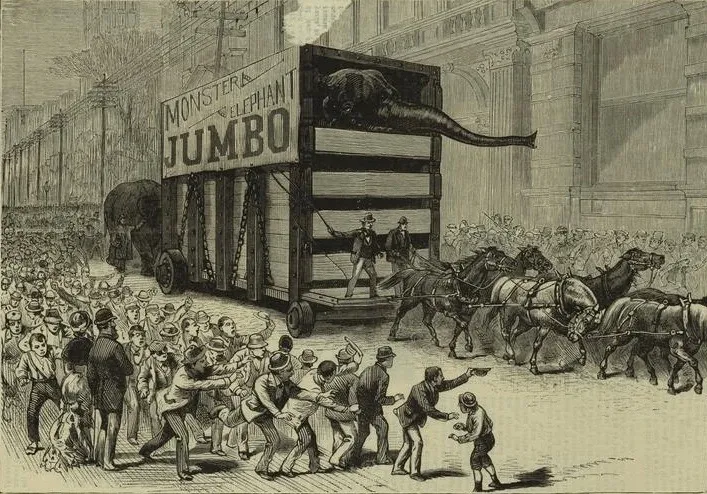
He didn’t offer a study. He offered proof. He knew that the best way to conquer fear was to test reality.
To be clear, I don’t want to romanticize the 1880s; there were plenty of safety and health problems to solve. But I do want to highlight a broader shift in our national character. We’ve drifted from a society of Builders to a society of Auditors.
The Builder operates in the real world. Their goal is an outcome: a standing bridge, a running power plant, a warm home. When a Builder faces a risk, they engineer a solution. They iterate.
The Auditor operates in a theoretical world. Their goal is a process: a perfect permit, a lawsuit-proof impact statement. When an Auditor faces a risk, they often try to outlaw it. They demand guarantees of safety before a single shovel hits the dirt.
We’ve handed the keys to the Auditor, and you can see the consequences in two bridges.
The first is the Brooklyn Bridge. It was a construction nightmare. The technology barely existed. Engineers battled the science and laborers battled the “bends,” in underwater caissons. It took 14 years of brutal struggle to finish. But the obstacle was physics.
The second is the Mario Cuomo Bridge. Physically, it was a marvel. But the project started long before the 2013 arrival of the floating crane that could lift 12 Statutes of Liberty. It started in 1999, when the state decided to replace the Tappan Zee Bridge.
For the next 14 years we didn’t build; we audited.
We spent those years in a purgatory of feasibility studies and environmental impact statements, producing over 20,000 pages of documentation, 47 permits, and a few lawsuits. We spent more than a decade proving that we could build a bridge instead of building it. (It actually took only 5 years to build it.)
The Builder in 1883 spent 14 years fighting gravity. The Builder in 2013 spent 14 years fighting the bureaucracy.
This shift explains why construction productivity has fallen 40% since 1970. A home builder over half a century ago was more efficient than one today because they spent their time building, not complying. We can frame, wire and paint a house in 6 months, but in some cities it takes up to 3 years to get the permits to break ground.
And the American family suffers most. Regulations now account for nearly 25% of the final price of a new single-family home.
But this isn’t just about housing and bridges. As Ezra Klein and Derek Thompson have noted, we’re facing a systemic “crisis of capacity.” Whether it is a transmission line, a transit project, or a nuclear plant, the mechanism of checking has overwhelmed the mechanism of doing.
Even worse, the Auditor protects the status quo. Complexity is a moat. Massive incumbents have armies of compliance officers to navigate the labyrinth. A local family trying to build a duplex does not. By prioritizing the process over the product, we have rigged the game against the challenger.
This is the warning history offers us.
We’ve built walls of paper for safety, and trapped ourselves in stagnation. The pendulum has swung too far, and by making it impossible to build, we are choosing a slow decline over a bold future.
The Builders are still here. We have to dismantle the barriers and clear the path.
It’s time to stop auditing the future and start building it. Bring on the elephants.
See also:
Subscribe to Creative Frontiers for stories about people who build first and figure it out as they go.