Part 3: The Architecture of Privacy and Publicity
Read this post on Creative Frontiers.
The Courtroom
Somewhere in upstate New York, a teenage girl slammed her bedroom door behind her and sat alone.
This was not all that unusual. Teenagers have been avoiding the world in their bedrooms since doors were invented. But Abigail Roberson’s misery was different from the ordinary varieties of adolescent angst. She had, without warning and without her consent, become famous.
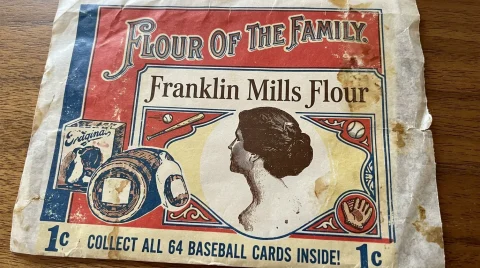
It wasn’t because she had accomplished anything particularly noteworthy or even sought the public attention. The Franklin Mills Company had simply gotten hold of her photograph and printed it on twenty-five thousand posters, which they then distributed to stores, warehouses, and saloons across the state, and apparently, much of the country. Above her face, in large plain letters: Flour of the Family. Below it: Franklin Mills Flour.
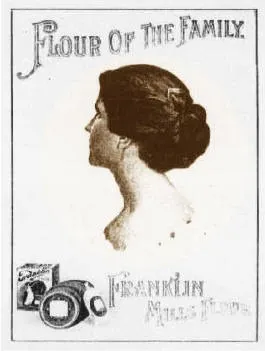
She had not been asked. She had not been paid. She had not been told.
When she discovered it, she suffered a nervous shock and was confined to her bed. In fact, it got so bad, her parents even called a doctor to help.
And that’s how, in 1902, Abigail Roberson, still a minor, found herself in court suing the Franklin Mills Company and the Rochester Folding Box Company for fifteen thousand dollars and an injunction. She wanted her face back. She wanted, in the language Warren and Brandeis had given the world just twelve years earlier, “the right to be let alone.”
Seven judges on the New York court of appeals heard the case of this young woman made sick by the commercialization of her image.
She lost, four to three.
The Legislature
The four judges who ruled against Abigail were not, to their credit, indifferent to her suffering. Chief Judge Parker, writing for the majority, acknowledged the wrong. He noted that Franklin Mills had acted with “impertinence,” and the use of her image was distasteful.
But, there was no right to privacy in the law. Yes, in 1890 Warren and Brandeis had proposed it, but no one had enacted it. If New York wanted to protect women from appearing on flour bags without consent, the legislature would have to take up the cause. Judge Parker even recommended that they do so, emphasizing that “no one should be permitted for his own selfish purpose to use the picture or the name of another for advertising purposes without his consent.”
And the dissent agreed. Written by Judge Gray, it highlighted how photography had made possible “an act of invasion of the individual’s privacy” that was “possibly more formidable and more painful in its consequences, than an actual bodily assault might be.” And he was joined by a chorus of outrage across the state as news spread that Roberson was defenseless against the invasion of her privacy.
The New York legislature responded immediately, passing Sections 50 and 51 of the Civil Rights Law in 1903. It was the first right of privacy statute in American history, and it prohibited the use of any living person’s name, portrait, picture, or voice for advertising purposes or purposes of trade without written consent. It seemed like a win for Roberson and others, but it was not what Warren and Brandeis had envisioned.
They had proposed a personal right to protect you from the injury that exposure inflicted on you as a person. It violated your inner self, disturbed your peace, invaded your personality. But how do you measure that injury? The law’s answer was commercial. It measured the wrong by if it was used “for advertising purposes or purposes of trade.” In other words, your image is protected because it has commercial value, not because it has dignity.
This was the big shift. Warren and Brandeis had argued that your face is not a commodity, it’s outside of the ownership framework entirely. The 1903 law now stated that your face is a commodity, and it requires your consent.
The Bubblegum Case
Nobody pulled on that thread for fifty years. Then in 1953, two chewing gum companies got into a fight over trading cards.
Haelan Laboratories and Topps Chewing Gum were competitors in the baseball card business, and both had obtained licenses from the same players to use their photographs on their cards. But Haelean believed their right was exclusive, and Topps disagreed. The players whose faces were of dispute were not even involved in the lawsuit. It was just a disagreement over contracts. Yet, the Judge, Jerome Frank, with just a few sentences made it much more than that.
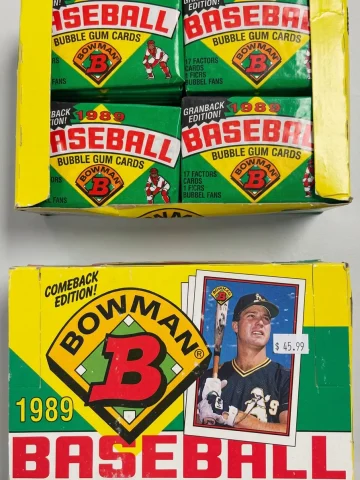
Frank acknowledged that the ball players had existing privacy rights, but also noted that a person has “a right in the publicity value of his photograph.” He didn’t offer legal precedents or expositions on common law to defend this assertion. Instead he explained that celebrities would “feel sorely deprived” if they didn’t get paid for the use of their face. It was a purely economic argument for a new right.
The next year, a lawyer named Melville Nimmer seized on this new opportunity. As legal counsel to Paramount Pictures, he recognized the opportunity before the industry. In a law review article, he took Frank’s statements and built something entirely new with them. Celebrities, he argued, deserved a full commercial property right. He called it the “needs of Broadway and Hollywood.” Transferable. Descendible. Assignable. Because they had worked hard to become famous, they should be able to cash in on it with an asset that could be licensed, sold, and inherited like any other.
The 1903 statute had placed your face in the marketplace with the right to deny its use. Nimmer had now written the deed.
The Deed
Elvis Presley died in 1977. In 2024, the state of Tennessee passed the ELVIS Act, the Ensuring Likeness, Voice, and Image Security Act, to protect artists from artificial intelligence tools that replicate their voices and likenesses without consent. It was named for the King, and it was framed as protecting artists.
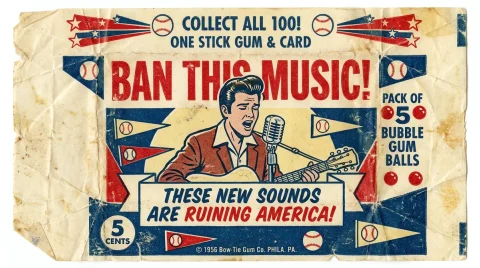
But AI cannot harm Elvis. He can’t be embarrassed. He can’t benefit from the protection. He can’t even object to the use of his voice or face. However, the Authentic Brands Group can, because they own the rights to his likeness, along with Marilyn Monroe, Muhammad Ali and a portfolio of deceased celebrities generating hundreds of millions of dollars each year.
The ELVIS Act doesn’t protect Elvis. It protects whoever holds the deed to Elvis.
Abigail Roberson didn’t want anyone to own her face. She wanted, as Warren and Brandeis had sought, the right to be let alone. Instead, what the law gave her, and has been building ever since, is a marketplace. A marketplace where your face has value, where that value can be owned, and where the owner is not always you.
She wanted her face back. The law that grew from her suffering gave someone else the right to buy it.