Read this post on Creative Frontiers.
It was another beautiful July evening in Hollywood, 1949. Two men stood in a driveway, staring at a metal box in the trunk of a Cadillac. Inside sat a technology confiscated from the Nazis, reverse-engineered by Americans, and paid for by a crooner.
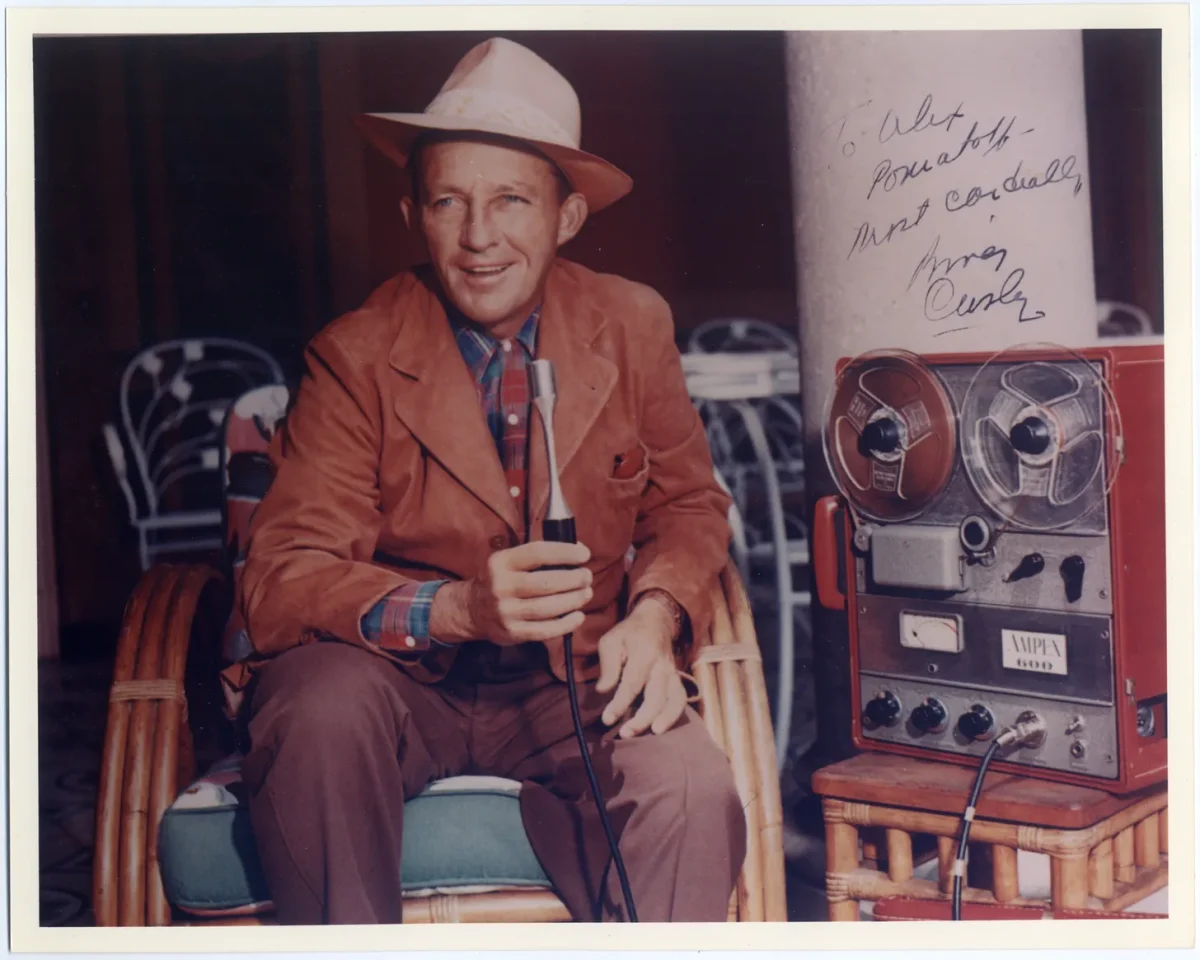
The man with the most famous voice on Earth, broke the silence. “I got this for you,” Bing Crosby said. “Have fun.”
The other man, the inventor of the electric guitar, Les Paul, stood in shock.
Both men saw the future in that trunk. But they saw opposite futures. Bing saw a way to do less. Les saw a way to do more. And in their hands, the face of music and entertainment would never, ever be the same again.
Why Bing wanted a break
To understand why Bing Crosby wanted to do less, you have to understand the plight of being Bing Crosby. In the 1940s, radio was live because recorded discs sounded terrible. So, if you had a show at 7:00 PM for New York and at 10:00 PM for Los Angeles, you performed it twice. Crosby, a man who treated leisure with the seriousness and devotion of a religion, hated this. He wanted to record the show in the morning and spend the afternoon on the golf course.
Enter Jack Mullin.
During World War II, Mullin was an Army Signal Corps officer. After D-Day he began discovering magnetic tape recorders, Magnetophons, across Germany. Audio recorded on them sounded as though it was being performed live. So, he brought two home to the U.S., along with 50 reels of tape, and began tinkering.
By June 1947, Mullin was ready to demonstrate this incredible technology in Hollywood. Bing Crosby sat amazed. He didn’t just hear audio fidelity; he heard tee times. He immediately hired Mullin and invested $50,000 in a small motor company, Ampex Corporation, to improve the Nazi tech… and to liberate his calendar.
It worked. Bing became the first to master commercial taping, creating a “fake” performance with edits and canned applause, a pace never heard before on radio, and the opportunity to hit the links by noon.
Technology, for Bing, was a hammock.
Les wanted more
Les Paul was different. Les didn’t want a hammock; he wanted an orchestra.
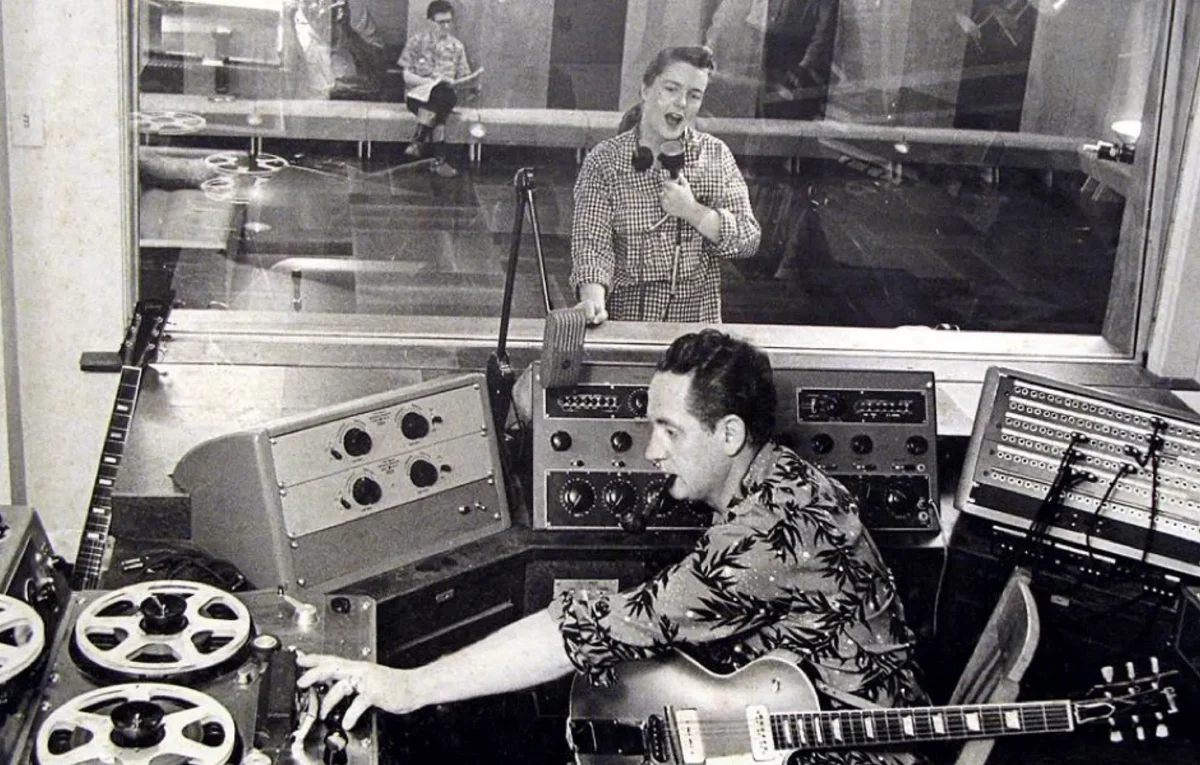
Since he was a kid, performing as, “Red Hot Red,” Les had been trying to accompany himself through recording. He’d built a crude recording lathe using a Cadillac flywheel from his dad’s garage, a drill belt from his dentist, and a paring knife from his mother’s kitchen. He would record a track to an acetate disc, then play along with that disc while recording to another disc. It was primitive, but it worked. And by the late 1940s he had mastered “Sound on Sound.”
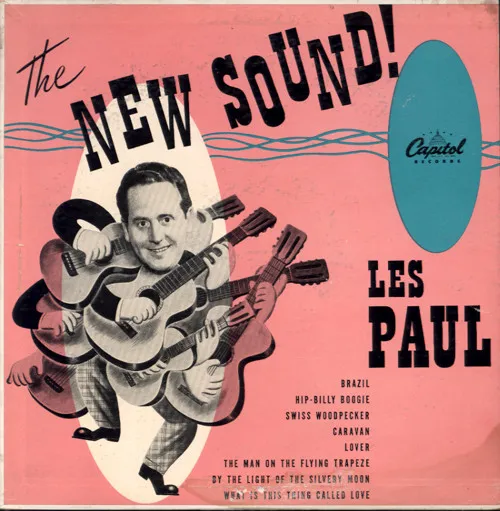
In February, 1948, he released “Lover,” a song featuring eight frantic, shimmering electric guitars playing together at impossible speeds. Comedian W.C. Fields told him, “My boy, you sound like an octopus.” The industry couldn’t believe what they were hearing. But the process was complex, and the audio degraded with every layer.
Until Bing showed up in the driveway.
Bing may have thought that he was giving his friend a way to relax. Instead, Les looked at the new machine and decided to hack it. He wondered: if he added a second playback head, could he play a duet with himself on the same strip of tape without the degradation. So, he sketched the design on an envelope, packed up with his wife, and music partner, Mary Ford, and drove halfway across the country to the Ampex office in Illinois.
At Ampex, Paul screwed an extra playback head onto his machine. He then rushed back to his hotel and tested the design. It worked. He and Mary could record layers of sound. They danced around the room then returned home and turned their garage into a hit factory, churning out 16 Top 10 hits in just four years. They had transformed recording from a snapshot of a moment into a collage of sound.
Bing had used the machine to simulate reality so he could leave. Les used it to construct a hyper-reality that could never exist live.
Layers of authenticity
We tend to complain that technology ruins authenticity, that it’s cheating, lazy, or “not real.” But Les Paul reminds us that the “purity” of the past can oftentimes just be a ceiling on what’s possible. He didn’t use the machine to fake talent; he used it to stack talent.
Today, we are staring at AI like they stared at that Ampex 200A tape recorder. The choice remains the same. You can use it like Bing: write your emails faster so you can go play golf. (There’s nothing wrong with that; I miss golf.)
Or, you can use it like Les: to build layer upon layer of creativity that was previously impossible for one person to hold.
Yes, machines make life easier. But the real gift isn’t that it just saves you time; it’s that it removes limits on your own capability. It doesn’t just let you leave the studio early; it lets you build an orchestra.