Read this post on Creative Frontiers.
It was just before noon on a late January day at the Church of the Ascension in Washington, D.C. The bride glided toward the altar adorned in a gown of heavy satin and crowned with a necklace of gold beads. Her soon-to-be husband waited anxiously at the front, though as the Washington Post noted, he wasn’t worth noticing other than to confirm “that there was a bridegroom.”
The press, however, was aglow with details about the bride, her father (a U.S. Senator and future Secretary of State), the wedding party, the ceremony, and the reception. In fact, reporters had been covering the events leading up to this momentous occasion for months, and they would continue to aggressively chronicle the couple’s private life for years to come.
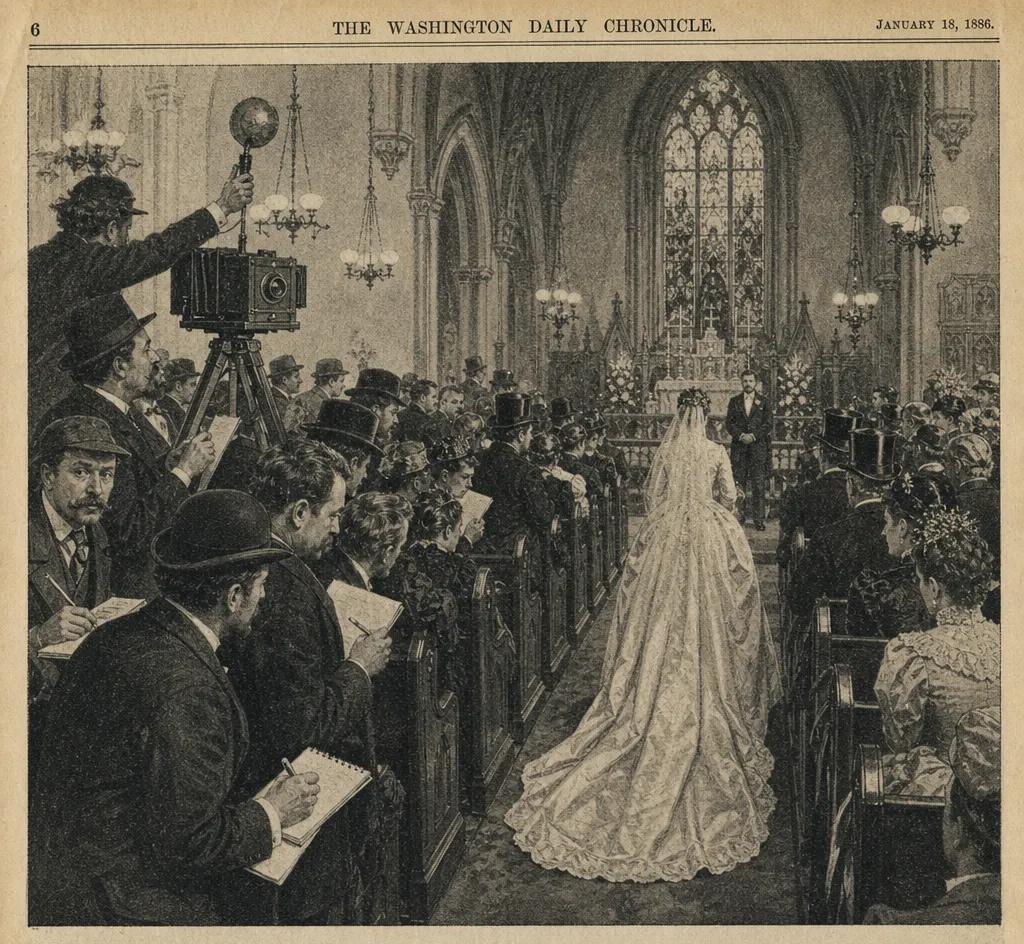
Eventually the groom, Samuel D. Warren, grew utterly exhausted with the relentless coverage and the incessant invasion of his privacy. So, he did what all good, aggrieved lawyers would do in such a predicament, he wrote an article for the Harvard Law Review.
That 1883 wedding, and the essay it ultimately provoked, would dramatically change the course of American legal history. It stands as a foundation on which debates today unfold over what it means to have rights to your identity.
The Right to Be Let Alone
Published in 1890, “The Right to Privacy” remains one of the most famous legal articles ever written. Driven by sheer, aristocratic annoyance, Samuel Warren had enlisted the assistance of fellow Boston-lawyer and future Supreme Court Justice, Louis Brandeis, to address a new assault on modern humanity. Together, they drafted architectural plans for a brand-new legal doctrine they called, “the right to be let alone.”
The problem was that the existing legal framework only protected you from lies. If a newspaper published a false rumor, you could sue for defamation. But if a “Kodak fiend” snapped your photo and published it in the rapidly growing press, you were out of luck. They hadn’t stolen or copied your property, and they hadn’t lied about your reputation. They had just harvested your private life for public consumption. And as Warren and Brandeis explained, that was a severe personal injury:
The intensity and complexity of life, attendant upon advancing civilization, have rendered necessary some retreat from the world, and man, under the refining influence of culture, has become more sensitive to publicity, so that solitude and privacy have become more essential to the individual; but modern enterprise and invention have, through invasions upon his privacy, subjected him to mental pain and distress, far greater than could be inflicted by mere bodily injury.
Their thesis was revolutionary: these new invasions of privacy were an assault upon a person’s fundamental rights. In a chaotic modernizing world, that private oasis, that peace of mind, was more necessary than ever for an enjoyable life. Therefore, Warren and Brandeis argued, the law required an urgent update to guard your rights to life, liberty, and the pursuit of happiness.
Unlike the Founders, who treated their famous faces as civic assets, Warren wasn’t protecting a public image, he was protecting a private self. He and Brandeis were insisting that a new human right be legally recognized, a right to protect your inner self from being exposed and exploited in the media market.
The Kodak That Runs on Algorithms
Fast forward to 2026, and we are facing a similar technological disruption, with a similar effort to protect your rights. But the proposed solution is very different.
Generative artificial intelligence is the new Kodak. It can clone your face and your voice without your knowledge, without your consent, and within a matter of seconds.
Like Warren and Brandeis over 135 years ago, many are worried about what this means for your ability to protect against the unauthorized fabrication and distribution of, well, you. Today, the legal response in Congress is to champion the recently revised NO FAKES Act (a deeply tortured acronym for the Nurture Originals, Foster Art, and Keep Entertainment Safe Act.) It’s a federal approach modeled on the recently adopted Tennessee law, the Ensuring Likeness, Voice, and Image Security Act, or ELVIS Act.

Ostensibly, these bills are twenty-first century updates to Warren and Brandeis. They’re shields to protect not just your privacy but the unauthorized replication of your identity. But, there is a glaring difference. As legal scholar Jennifer Rothman notes, such modern legislative efforts tend to abandon Warren’s concept of personal privacy rights in favor of constructing broad, transferable property rights. They legally transform your likeness and your voice into a thing that can be owned.
Warren’s and Brandeis’ project was to create a new legal principle of protection specifically because your identity isn’t property. As they explained it, your “personal writings and all other personal production” cannot be classified as property “unless that word be used in an extended and unusual sense.” They proposed a right to privacy, instead of a right to property, because they believed that human identity sits outside of the ownership framework entirely.
They wanted to shield you from being treated as property. These new legal remedies actually constitute the self as property.
Who Owns Who?
Marilyn Monroe famously said, “I restore myself when I’m alone.” Like Samuel Warren, she deeply understood the value of privacy and the desperate need for a retreat from the cameras.
But the law didn’t give Marilyn Monroe a shield to protect her inner self. Instead, it gave her a transferable property right. It turned her identity into a commodity.
Because of that shift, today Monroe isn’t a person, she’s a corporate portfolio. The Authentic Brands Group, a licensing conglomerate, owns the rights to her face and voice, raking in around $80 million dollars each year for them.
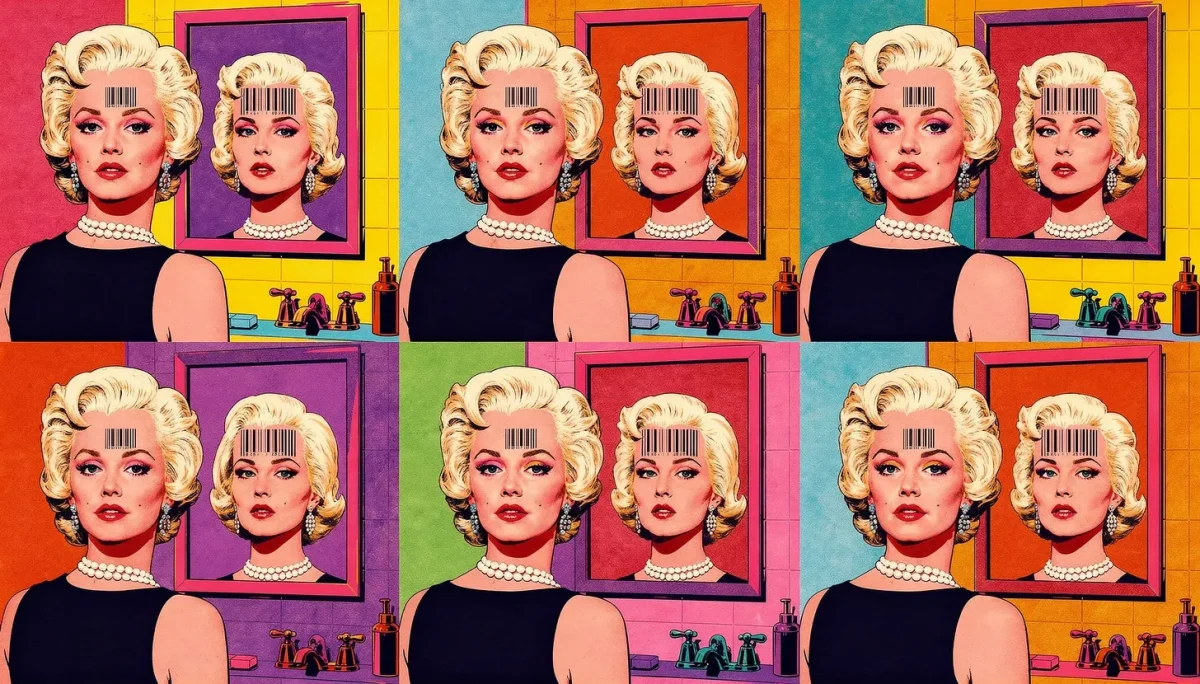
Maybe Samuel Warren would smile knowing that a legal mechanism exists to protect a person from exposure. But perhaps he would frown realizing that identity has become a tradeable asset, and the consent required doesn’t have to be your own. Anyone with enough capital can simply buy the deed.
So, how did American law move from protecting the human soul to licensing it? It started with a flour girl from upstate New York. We’ll catch up with her next time.