Read this post on Josh’s Substack: Powering Spaceship Earth.
“It surprised me how difficult it was to destroy,” David Michaud said.
Michaud, a mining consultant, had just put an iPhone 6 into an impact machine and dropped a more than 120-pound hammer on it from about three feet above. As author Brian Merchant relays in Vice, the “battery caught fire.” They then tried to reduce the burned remains of the phone into powder with an industrial blender. When that didn’t work, they turned to a “ring and puck pulverizer,” which are also sometimes called shatterboxes.
The end product was now a powdered iPhone 6 and a list of the 30 components making it up. The ten generations since the iPhone 6 haven’t fundamentally changed the needs of advancing technology. Minerals, especially certain rare earth minerals, are necessary for modernity.
The good news is that minerals don’t really get used up. Apple, for example, plans to recycle its products into new editions. That powderized iPhone 6 may end up in your next MacBook, phone, or AirPods. Apple already uses 100 percent recycled cobalt in its iPhone 16 batteries (and is at 100 percent recycled materials for other components).
Part of the reason for recycling is that the hard part is getting stuff out of the ground. In fact, the US is one of the slowest at permitting and building new mines. A 2024 report from S&P; Global placed the US at second to last in how long it takes a mine to go from discovery to production–29 years compared to Zambia’s 34!
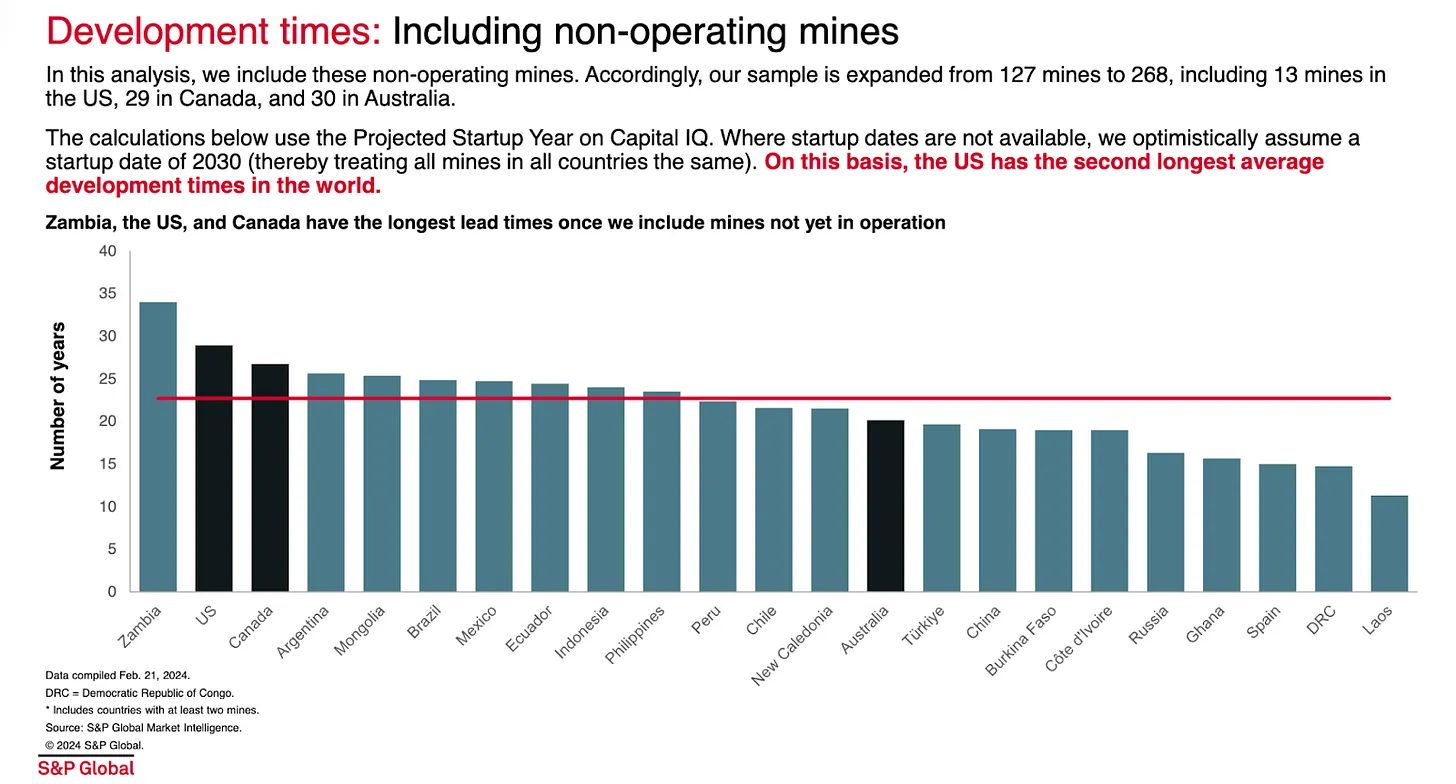
Minerals are the bedrock of modernity. They go unnoticed but are a foundation we could not continue without. They underlie everything from smartphones to electric vehicles. Recycling helps, as do efficiency improvements that reduce the amount of critical minerals needed for devices and tools. However, those are unlikely to replace the need to extract more minerals from the ground. The simple reality is that every delay means falling behind in the race to fuel innovation.
Taking nearly three decades to bring a new mine into production is unacceptable. Whether it’s the next generation of smartphones or cutting-edge renewable energy systems, our brightest breakthroughs depend on resources we haven’t yet extracted.
Request for advice, help, and recommendations on what to read about mining
This piece is inspired by a longer piece on mining, and particularly mining regulations, that I am working on. I would welcome any of your suggestions for books, articles, researchers, and more to read or talk with about the project.
In turn, my recommendations if you’re interested:
- Updated Mining Footprints and Raw Material Needs for Clean Energy, Breakthrough Institute
- Hannah Ritchie has written on the mining needs for wind and solar multiple times that are all indispensable.
- S&P; Global’s report.
- Economist Dominic Parker’s policymaker summary about his research on conflict-mineral regulations for the Property Environment Research Center.
- Mining for peace, a CEPR discussion paper on mining and resource conflict.
- Nick Loris’s 2023 testimony on critical minerals.
