Read this post on Creative Frontiers.
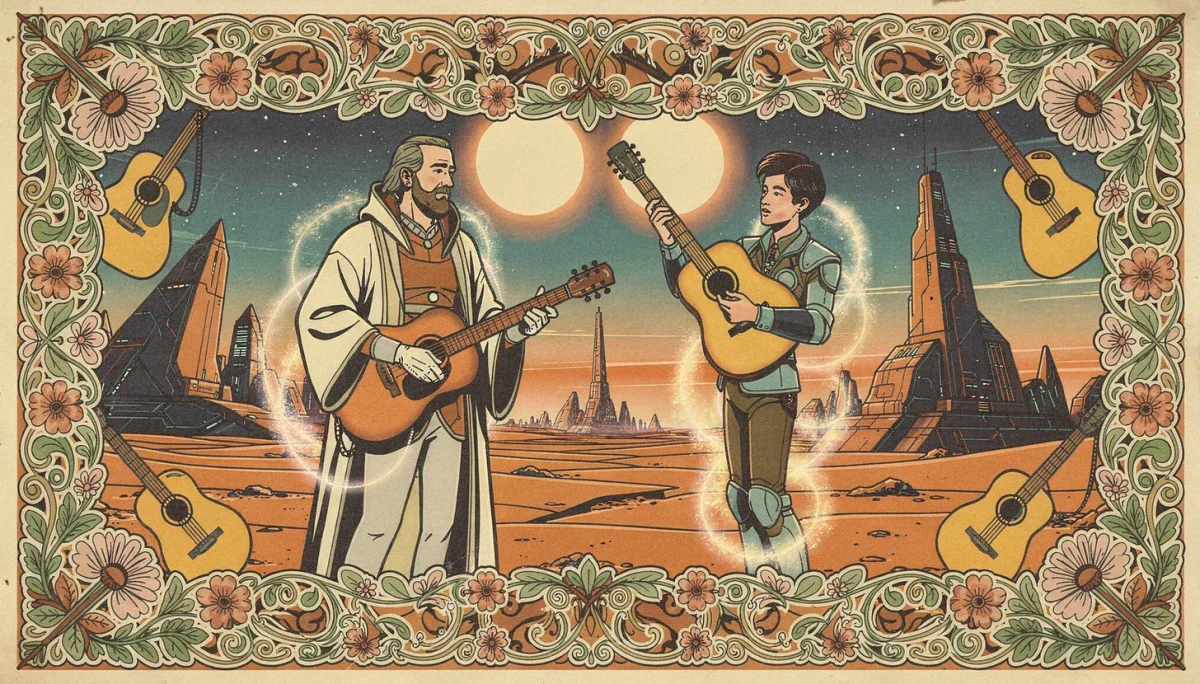
In the early 1960s, a young Bob Zimmerman was the Luke Skywalker of the burgeoning folk music renaissance. Operating under the name Bob Dylan, he was eagerly learning the ways of the folk from his own personal Obi-Wan Kenobi: a seasoned artist and historian named Paul Clayton. Then Obi-Wan sued Luke. Clayton took Dylan to court for copyright infringement.
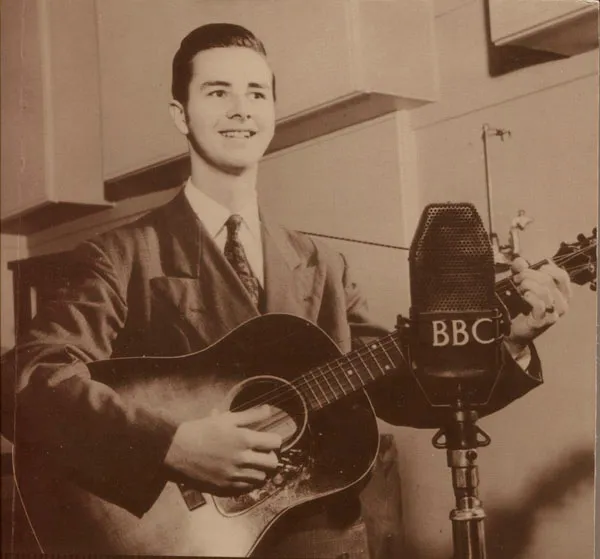
Paul Clayton was a “song catcher.” He traveled the quiet dirt roads of the country, absorbing the stories and songs of remote America. In 1958, he found himself in a log cabin in Brown’s Cove, Virginia, listening to a local woman named Mary Bird McAllister. She sang an old tune for him called “Who’s Gonna Buy Your Chickens.” No one knew who actually wrote it; it was just a vestige of oral tradition.
Clayton liked it. He took the framework, rewrote the lyrics, and recorded it as “Who’s Gonna Buy You Ribbons (When I’m Gone).”
Dylan heard his mentor perform the song and, as musicians do, decided to spin it forward. He reworked the melody a bit, wrote some new lyrics, and recorded it. He called his version, “Don’t Think Twice, It’s All Right.” It quickly became a defining anthem of Dylan’s career.
Now, Dylan fully admitted he borrowed from Clayton. And Clayton had done exactly what musicians have been doing since a caveman first beat a stick against a rock: he took an old tune, updated it, and passed it along. Beethoven recycled Ranz, Handel imitated Erba, and Bach borrowed from Albinoni. Led Zeppelin quoted Willie Dixon, Muddy Waters recomposed Robert Johnson, who emulated Son House, who modeled a name lost in time.
But when Dylan did it, Clayton discovered a deep, abiding reverence for intellectual property rights. And two friends swapping an old communal tune were suddenly trapped in legal gridlock.
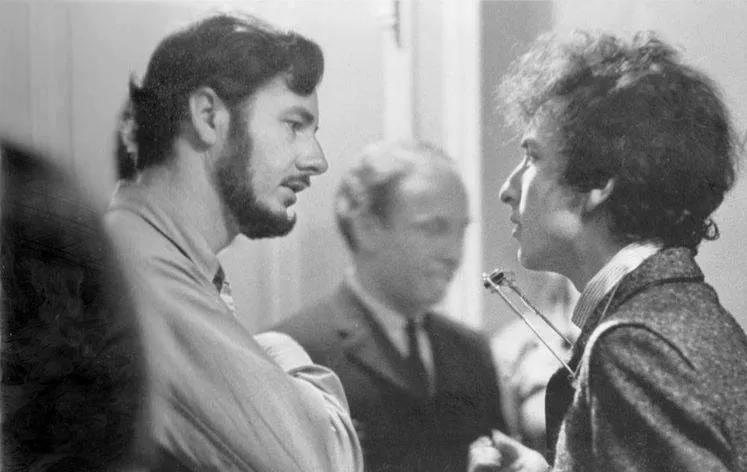
So, how did a mentorship become a lawsuit? It boils down to a fundamental tension in art: the creative instinct is communal iteration, but the market instinct is individual monopoly.
Most of our music: rock, blues, folk, and hip hop is deeply rooted in West African culture. Legal scholar Olufunmilayo B. Arewa explains that in those traditions, music is celebrated as a communal construction. The circle is the site of creativity. The focus is on function, ritual, participation, and continuity. The originality is in the performance not the composition. The innovation is in subtle shifts in rhythm, call and response phrasing, or instrumentation.
Those are the roots, but today, in the West, we see it differently. We harbor a romanticized notion of the artist as a sole creator, as an individual author. To protect that creator, we rely on monopolies.
Now, “monopoly” sounds scary, like a guy with a monocle who won’t let you pass Go or charges you exorbitant rent for Park Place. But excluding others both incentivizes creators (producers) and rewards us (consumers) with the fruits of their labor.
Does that mean we have monopolies that restrict the spread and use of ideas? Well, not exactly. Copyright protection does not extend to an idea, just the expression of that idea. I can’t copyright something in my head, only how I manifest it in the world.
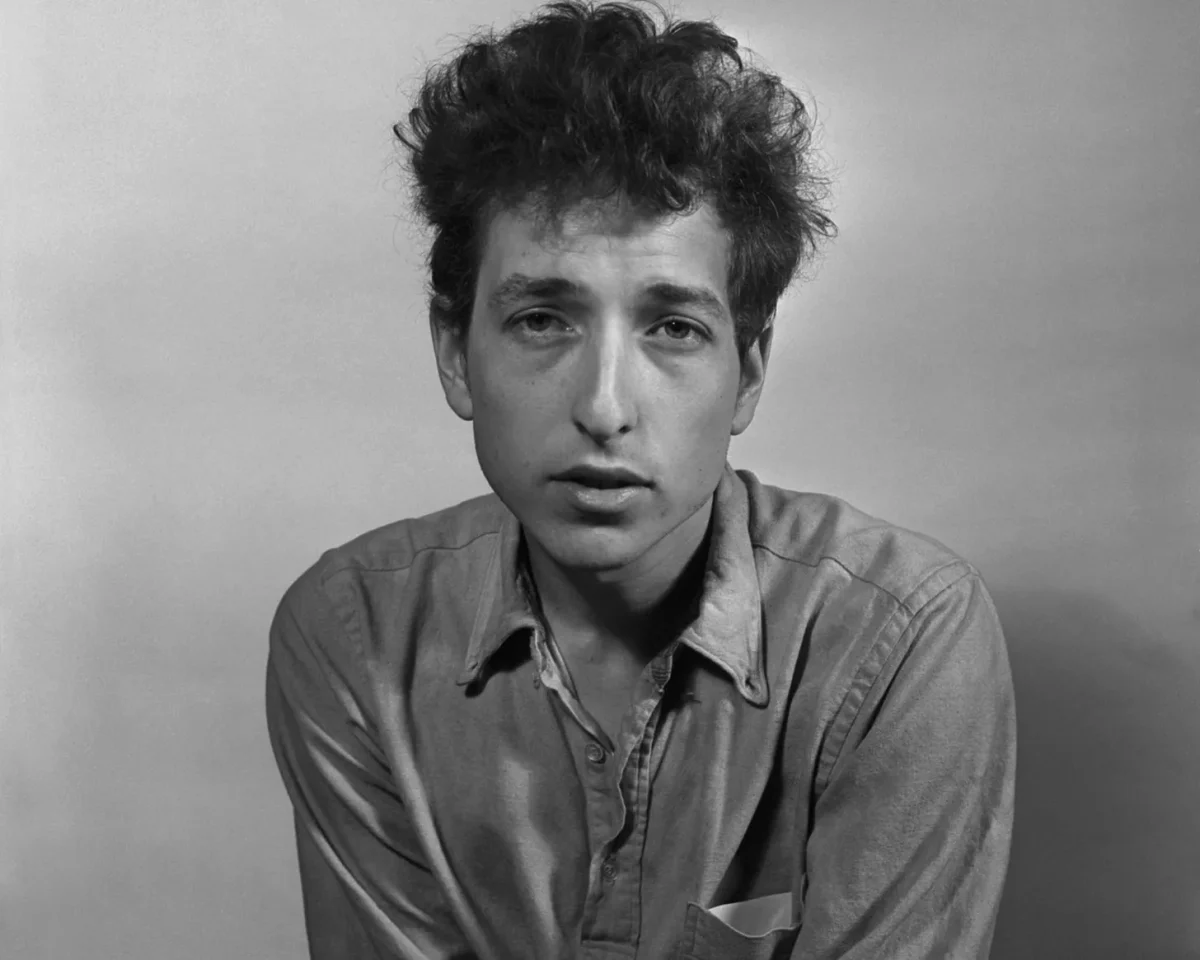
In music, though, distinguishing between an idea and an expression is maddeningly murky. Let’s say you create an updated version of my song. My expression is now an idea for you, and with it you have created a new expression. So…. did you steal my expression or are you just participating in the circle of creativity?
With such a blurry line, over the years the law has been broadening the scope of rights. As scholar Siva Vaidhyanathan notes, copyright began as a reasonable protection for physical copies, stopping someone from bootlegging the sheet music you wrote. But now it regulates “performance, transformative works, slight and oblique references, and even access.” We’re hammering the communal circle of borrowing into a straight line of tightly defined ownership.
Which brings us to today. On one side, we have tech companies and emerging artists, leaning into the circle, approaching recorded history like an open-source buffet to pioneer the future. On the other side, we have labels and established artists protecting the livelihood of creators by requiring notarized permission slips for chord progressions. Which side is right?
The answer is in between, and the Founders understood this. They designed copyright as a compromise, a monopoly “to promote the Progress… of useful Arts” but only for “limited Times.” It’s enough exclusion to keep the lights on but not so much to starve the next generation of inspiration. But over time, as we’ve hammered more and more of the circle into a straight line, have we lost the balance?
In a healthy creative ecosystem, established Paul Clayton and upstart Bob Dylan can both pay their rent, but with claims to ownership that are not so excessive as to break the folk process. Today, as we consider building more fences, we should be careful. When we build too many gates in the desire to reward creators, we don’t just wall off the past, we hand the keys to whoever has the best lawyers. As a result, we could lock out the unknown Luke Skywalkers of tomorrow’s music.