Part 1: The Architecture of Privacy and Publicity
Read this post on Creative Frontiers.
He arrived in France by boat in December. The trip was a huge risk. He had just committed what his government would call treason, and if caught, he would surely be tossed in prison and most likely killed.
So, a low profile was in order.
But that was impossible.
He was, by most accounts, “the most famous American in the world.” As he walked the streets of Paris, crowds gathered. His face was painted on dishes, etched into clocks, glazed onto vases, and stitched on clothing. As he wrote to his daughter, “your father’s face [is] as well known as the moon.”
And it was all done without his permission. He was furious. Just kidding, he found it amusing. He joked that with dolls of him scattered across the country, he could “truly be said… to be i-doll-ized.”
He didn’t sue anyone. He didn’t even threaten to sue anyone. The very idea of owning his face would have struck him as bizarre.
So, Benjamin Franklin, Ambassador to France, just laughed it off.
The Republic of Faces
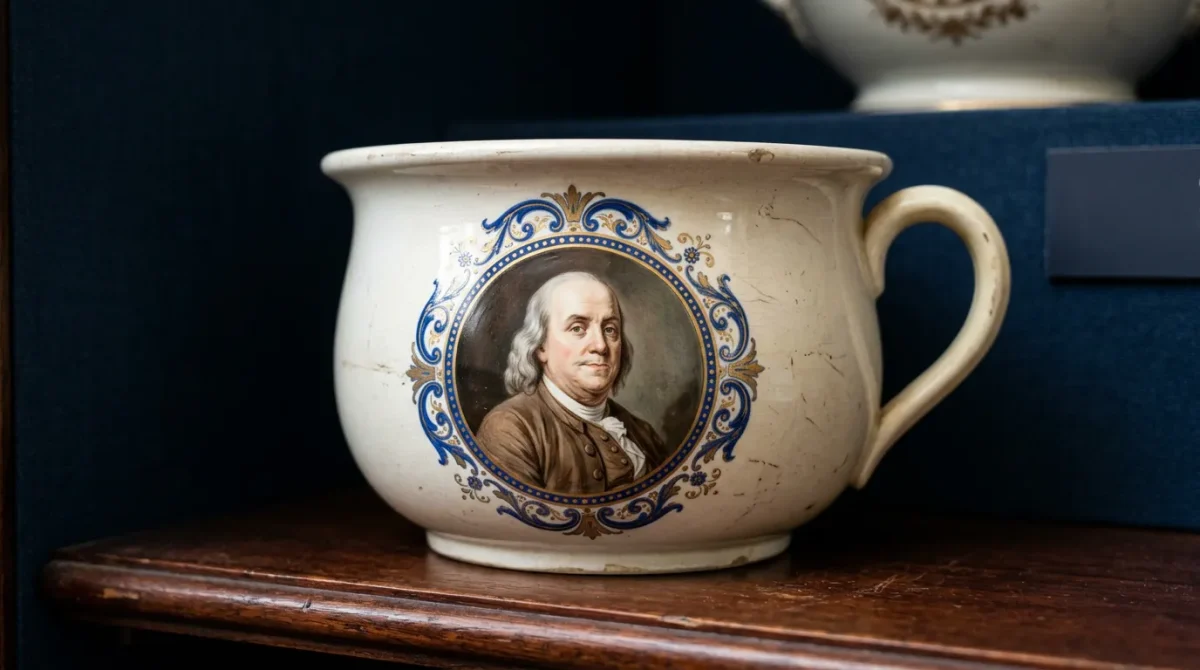
Franklin wasn’t unusual. (Well certainly in his fur cap he was a bit eccentric, and it was odd that his face was painted on the inside of a chamber pot, a passive-aggressive gift from King Louis XVI to a courtier who was a little too smitten with the American.) But Franklin was entirely ordinary in his indifference to the use of his likeness.
Josiah Wedgewood took full advantage. He sold thousands of medallions bearing the faces of his “Illustrious Moderns:” Voltaire, Rousseau, Newton, and Franklin himself. By 1779, these “baubles” were outselling the elegant tea sets that made Wedgewood rich. Other entrepreneurs joined in, peddling pitchers, plates, fans, perfume bottles, and household goods adorned with the names and faces of the famous. And all of it without a licensing agreement.
The Founders didn’t just tolerate this; they celebrated it. Their faces were a kind of republican asset, belonging to the public as an instrument for building the new nation. And their fame was a sign of achievement, not an income stream.
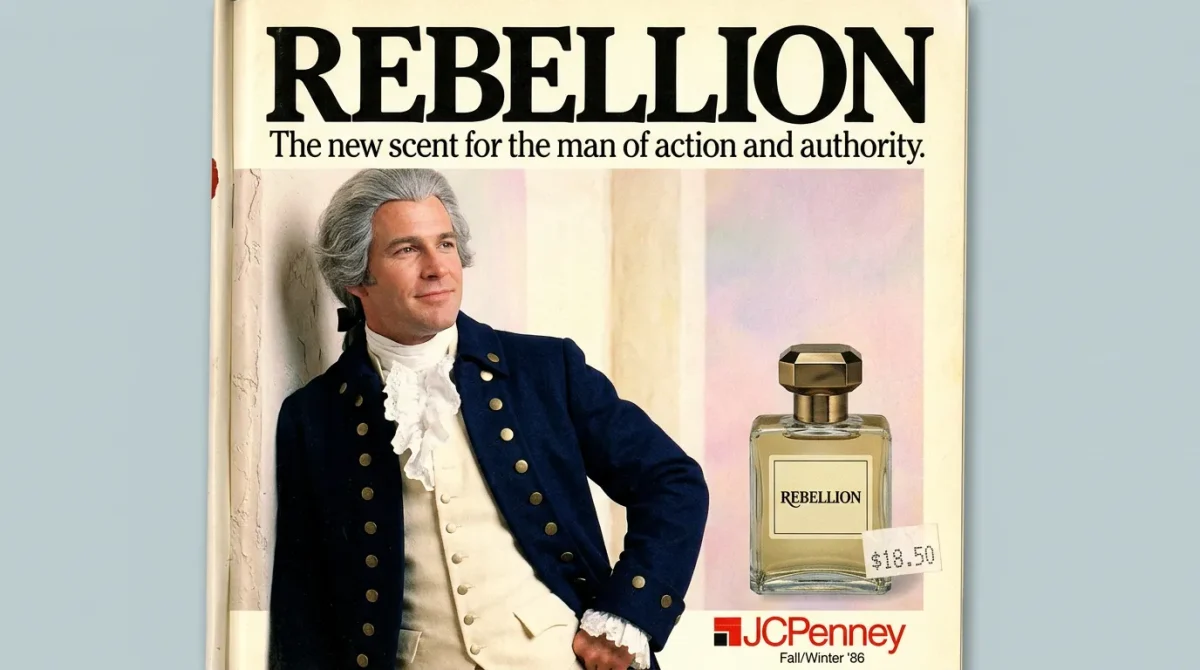
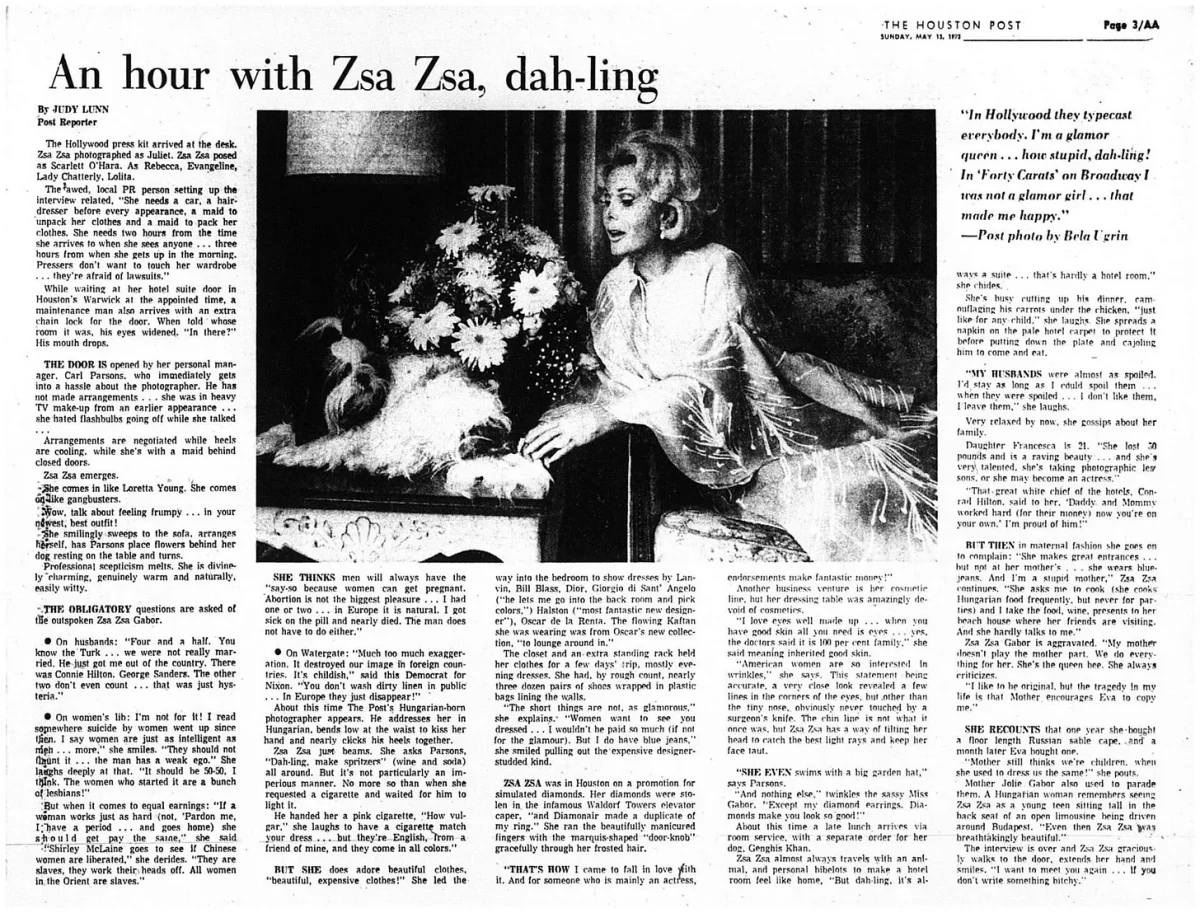
That’s a tricky concept to grasp in today’s culture, where the Zsa Zsa factor dominates. Today, people become famous simply for being famous and then they monetize the attention. But Samuel Adams didn’t become well-known for an outrageous lifestyle and then launch a fragrance line. (“Rebellion,” for the man who prefers his tea served cold, salty, and by the crate.) No, back then, celebrity was recognition of accomplishment and civic virtue.
And this wasn’t just a Revolutionary-era quirk. Throughout the nineteenth century there were no lawsuits over cigar boxes bearing the faces of every president from Lincoln to Cleveland. There was no litigation over photographs of John Brown or Freckle Cure advertisements featuring Oscar Wilde. The social historian Neil Harris, surveying it all, concluded that “some unspoken assumption made famous people…a species of common property whose commodity exploitation required little control.”
Then, at the end of the nineteenth century, a wooden box from Rochester ruined the vibe.
Enter the Fiends
George Eastman’s Kodak camera, which we explored last time, revolutionized photography. Before 1888, taking a photograph required heavy equipment, volatile chemicals, and specialized expertise. Photos were rare, formal, and almost always consensual. After 1888, they were none of those things.
Meanwhile, there was a new, commercial demand for images. The industrial revolution was creating a surplus of goods, and advertisers were discovering that pictures stopped the eye in ways that dense columns of text never could. And journalism was racing in the same direction. Daily newspaper circulation jumped from 2.6 million in 1870 to 8.4 million in 1890, and the new sensationalist press competed ferociously for readers by using images. Editors began paying double for candid, unposed photos of unsuspecting celebrities. The paparazzi had arrived.
Here was the new challenge. Before the Kodak, you generally knew if someone was taking your picture. The equipment practically announced itself. But now, a stranger on the beach could capture your face without your knowledge, and with the insatiable demand for photos, you might wake up to find it in the local paper or on a shelf at the corner pharmacy. Many quickly grew weary of the exposure, dubbing these rogue photographers, “Kodak fiends.” One observer even warned that they were “ in league with some evil spirit.”
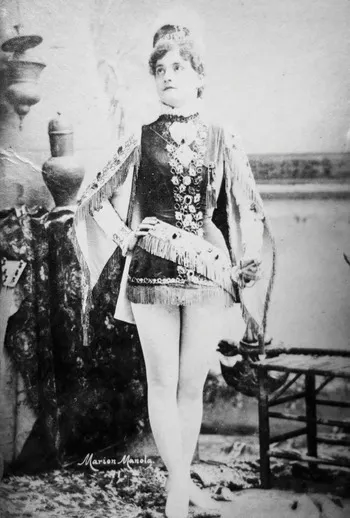
The lawsuits followed. In 1890, opera star Marion Manola sought an injunction after advertisers circulated a candid photo of her in tights to promote a play. Sir Morrell Mackenzie sued over a throat elixir that borrowed his endorsement without asking. Colonel John Atkinson’s widow went to court to stop the use of her late husband’s name and likeness on a cigar brand. The thread running through each: a face used commercially, without permission, in a culture that had just made that trivially easy to do.
And the courts didn’t have a consistent response. The camera had transformed American culture, while the law was still rooted in Benjamin Franklin’s era.
So, one Boston lawyer decided he’d had enough. He had married into a high-society media circus and was sick of the uninvited cameras. Partnering with a future Supreme Court justice, he set out to build a new legal remedy, a right to privacy. We’ll get there next time.
Stone Tablets and Duct Tape
Today, A.I. has us grappling once again with who owns faces and voices. Many proponents of stronger protections reach for the language of fundamental rights, inherent protections, and natural claims, as though the answer is obvious. But it isn’t.
These rights were built in response to a specific technology, at a specific moment, by specific people with specific grievances. The Kodak created a social friction that the law wasn’t prepared to handle. It would take years of lawsuits, a landmark law review article, a sympathetic “flour girl,” and a legislative uprising to construct the privacy framework we have today.
Now a new technology has arrived once again, and many feel the existing legal framework is insufficient to manage it. But as we draft new iterations, it pays to look closely at how our current foundation was poured. We’ll dig into that story next time.